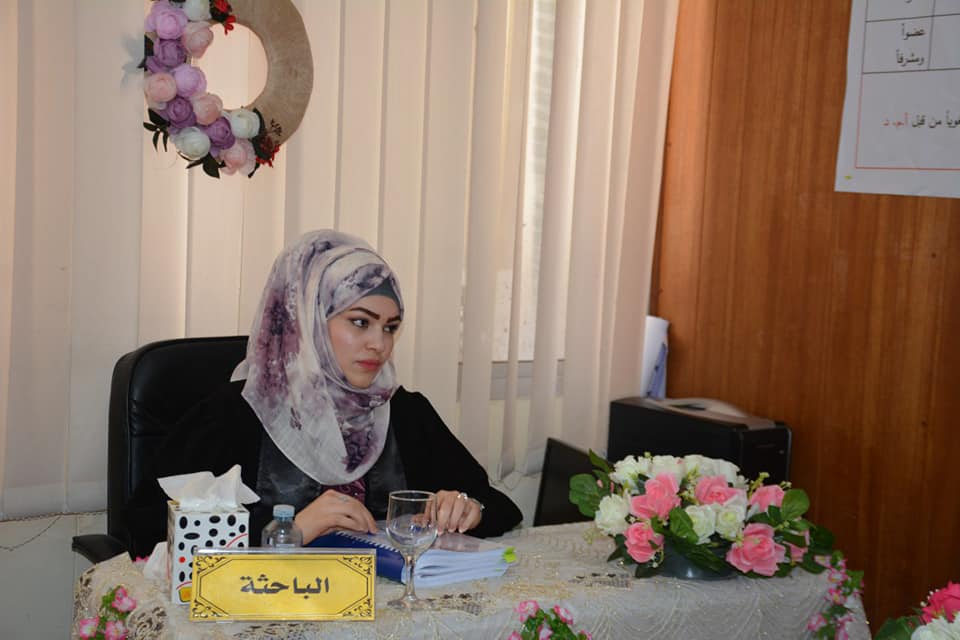
Master Thesis in the College of Education for Human Sciences examines (Mohsen Al-Aini and his political role)
Master Thesis in the Department of History / College of Education for Human Sciences, University of Basra, examining (Mohsen Al-Aini and his political role in Yemen 1932-1997) by the student _ Shahd Ali Abdullah Al-Amara.
The message dealt with (one of the important leading figures in the contemporary history of Yemen, as Mohsen Al-Aini is one of the Yemeni figures who did not study an academic study, and this study came as an attempt to answer many questions and ambiguities surrounding this character, in addition to revealing its activities and what role it played In the history of her country and knowing the reasons for holding several ministerial and diplomatic posts in the period extending from (1932-1997), in addition to that, shedding light on his domestic and foreign policy that was accepted by the great powers (the United States, Britain and the Soviet Union).
The thesis included (an introduction and four chapters, followed by a conclusion, appendices and a list of sources. The first chapter dealt with his birth, his upbringing, and the beginning of the national action 1932-1962. The second chapter was devoted to highlighting the political role and diplomatic activity of al-Ayni 1962-1969. The third chapter examined the internal and foreign policy of the Al-Aini government) 1970-1974 The fourth and final chapter is devoted to shed light on Al-Aini's last ministry and its diplomatic activities 1974-1997)
The message concluded, (Mohsen al-Ayni is a political and diplomatic figure whose peer has been scarcely in the contemporary history of Yemen, who called for reform in order to establish a state of institutions that would advance the reality of the Yemeni Arab Republic, and he succeeded in seeking reconciliation between the republicans and the monarchists in 1970, as well as in gaining recognition by Arab and foreign countries of the new regime. In clear steps towards achieving the 1972 unity agreement between the two parts of Yemen, which was the basis for the agreements that followed 1979 and 1990, and thanks to his foreign policy, he was able to obtain aid in various fields from the countries of the eastern and western camps.)