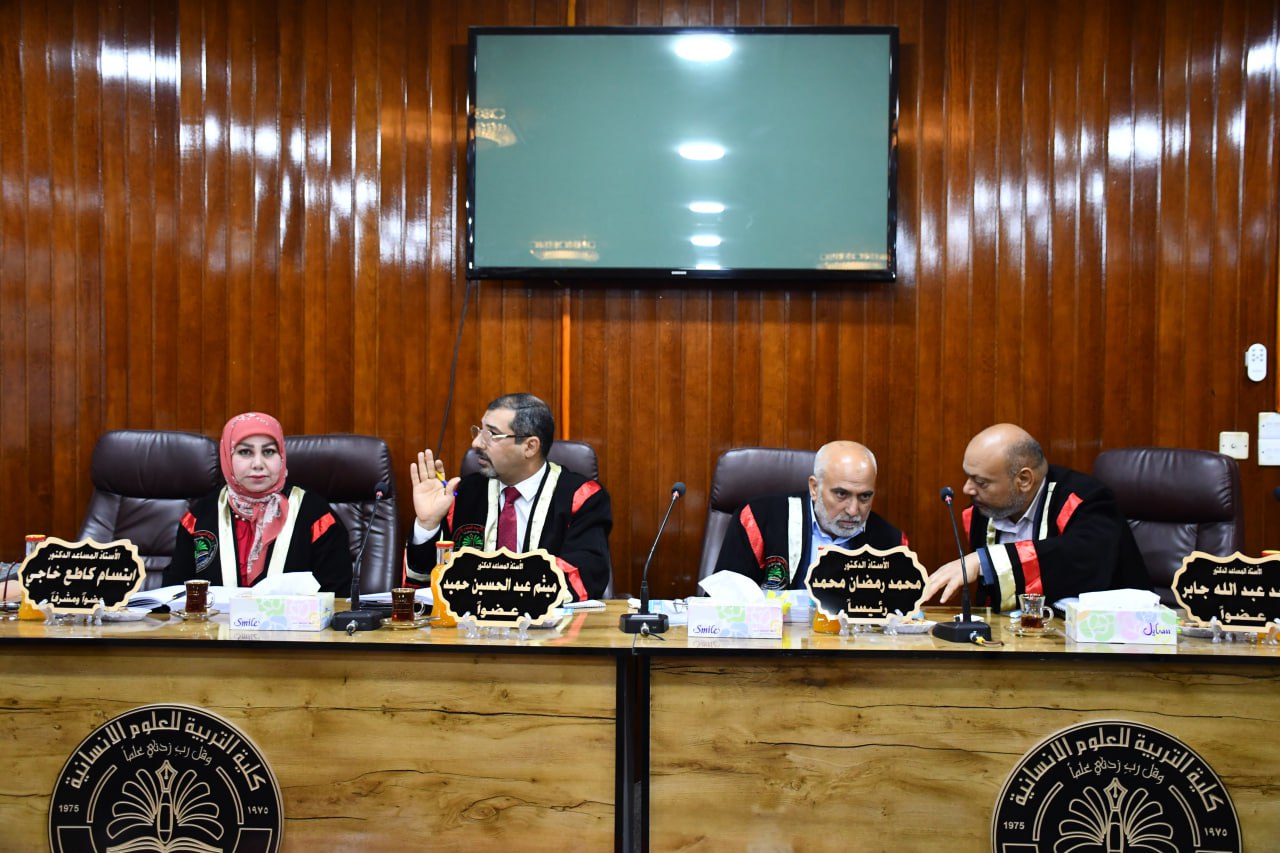
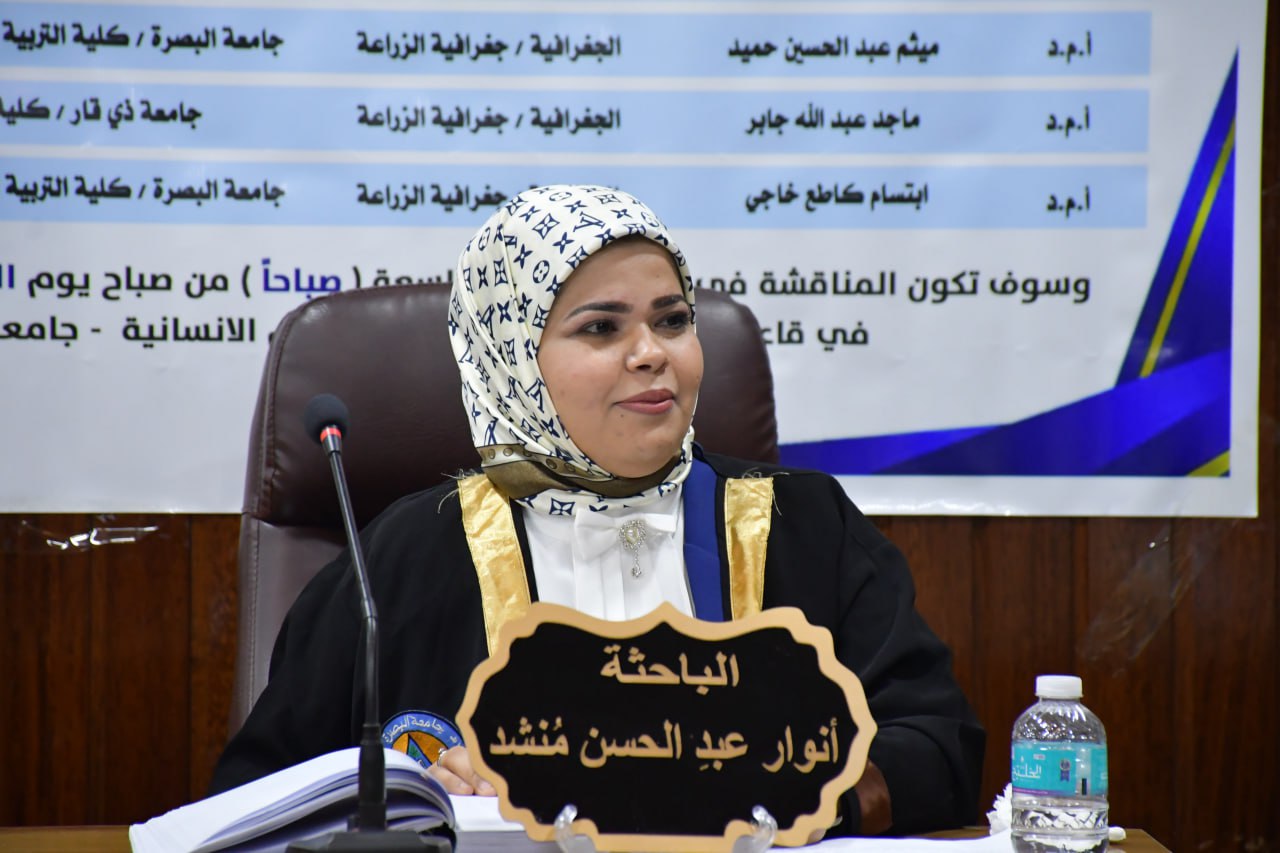
A master’s thesis in the Department of Geography - College of Education for Human Sciences - University of Basra (uses of agricultural land in the city district), a study in human geography by the student (Anwar Abdel Hussein Munshid Al-Samah) was researched.
The study aimed to know the geographical distribution of agricultural land uses in the city district, and to demonstrate the impact of geographical factors (natural and human) that shaped this distribution, in addition to highlighting the most important problems that stand as an obstacle to the development of these uses.
The thesis includes four chapters preceded by an introduction, as follows:
• Chapter One: This chapter dealt with the natural factors affecting the uses of agricultural land in the city district, represented by (geological formation, surface, climate, soil, water resources, natural vegetation).
• Chapter Two: This chapter dealt with the study of the human factors affecting the uses of agricultural land in the city district, which are represented by (labor, agricultural tenure, agricultural policy, irrigation systems, agricultural technologies, transportation, and agricultural marketing).
• Chapter Three: This chapter discussed the reality of agricultural land uses in the city district, both plant and animal, and explained the change in them during the period (2011-2022), and their spatial variation at the level of agricultural units.
• Chapter Four: Includes a study of the problems facing the uses of agricultural land in the city district.
At the conclusion of the study, the results and proposals were presented, as well as a list of sources, appendices, and a summary in English.
The message concluded as follows:
Natural factors have a lesser impact on the problems facing the uses of agricultural land in the city district compared to the human factor. If the latter is left untreated, large areas of agricultural land will turn into salt lands and swamps infested with reed and papyrus plants, in addition to the encroachment of urbanization on agricultural lands, which often This comes at the expense of fertile agricultural land, which threatens its area to gradually shrink over time if the situation continues like this without planning.