Under the patronage of the Dean of the College of Nursing at the University of Basra, Assistant Professor Dr. Majid Asghar Muhammad Al-Nawab
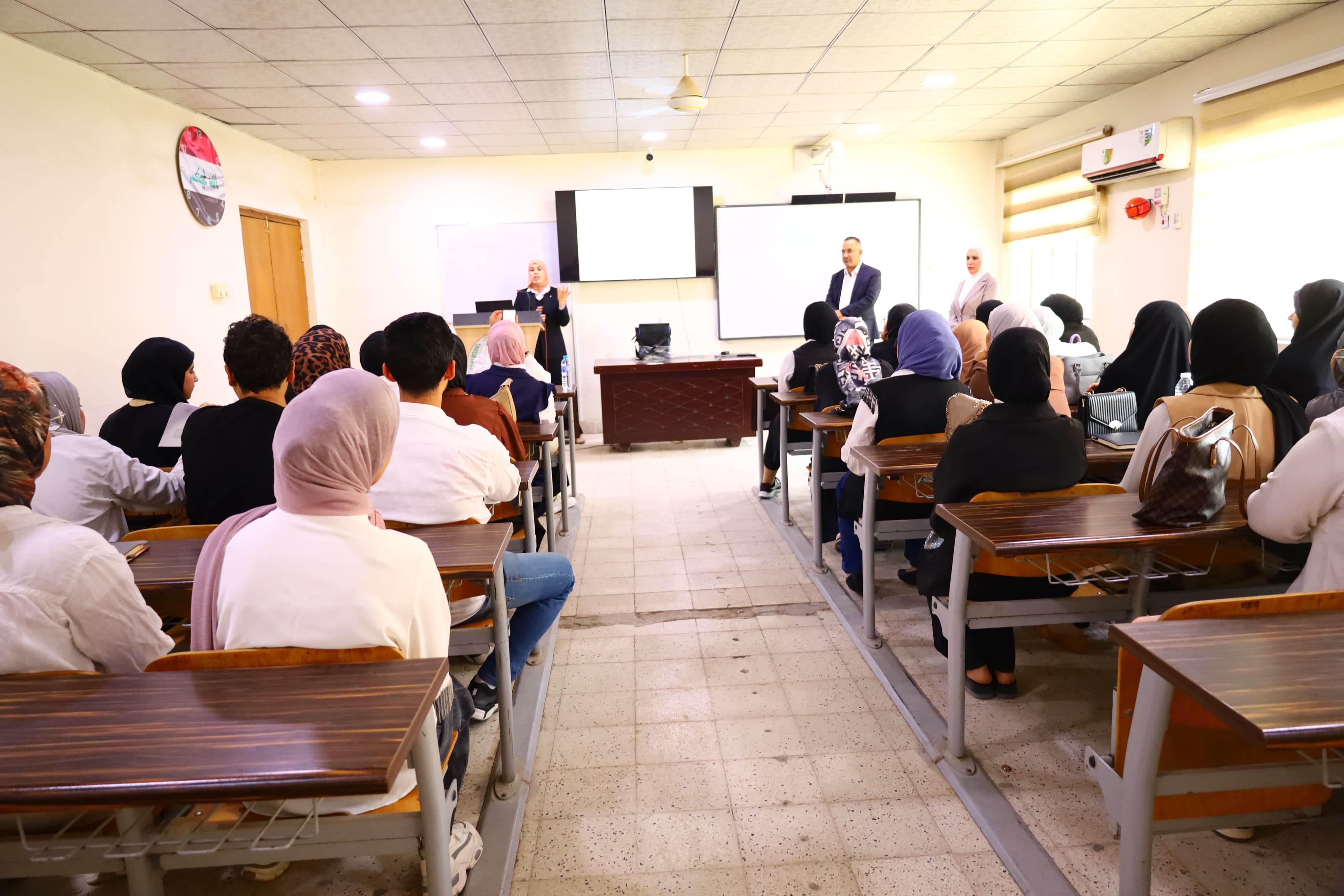
The Women's Affairs Unit, in cooperation with the Continuing Education Unit, organized a seminar on the importance of the population census and the participation of Iraqi women in elections
In which Assistant Lecturer Riyad Hussein Taqi, Lecturer Iman Taha Abdul Hassan, and Lecturer Dr. Fatima Jassim, members of the faculty of the college, lectured.
The seminar included the importance of the role of Iraqi women in the elections and their importance in Iraqi society in general. The seminar addressed another axis, the importance of the population census, as Iraq has witnessed several official population censuses since the establishment of the Iraqi state, as follows:
1. 1927 - The first official population census in Iraq during the royal era.
2. 1934 - A second population census was conducted a few years after the first.
3. 1947 - Third census with updated population data.
4. 1957 - This census is considered one of the most accurate censuses of that period and was conducted at the end of the monarchy.
5. 1965 - The first census conducted after the establishment of the Iraqi Republic.
6. 1977 - Another census was conducted, and a computer system was used to count the population.
7. 1987 - This census was detailed, and was conducted during the Iran-Iraq war.
8. 1997 - This census was conducted during the period of economic sanctions on Iraq, and did not include the Kurdistan Region.
9. 2009 - A census was conducted using surveys to update population data, but it was not considered a comprehensive or official census.
10. 2024 - There was a plan to conduct a comprehensive census, but it was not confirmed whether it was actually conducted or not due to various circumstances.
The censuses conducted after 2003 faced difficulties and challenges related to the security and political situation, which affected the conduct of a comprehensive and unified population census. This symposium also shed light on the important dimensions of the population census and its impact on planning and future development in Iraq and its role in securing economic and social data and the nature of the labor force for the purpose of organizing administrative procedures and planning for economic growth in its various branches.
 |
