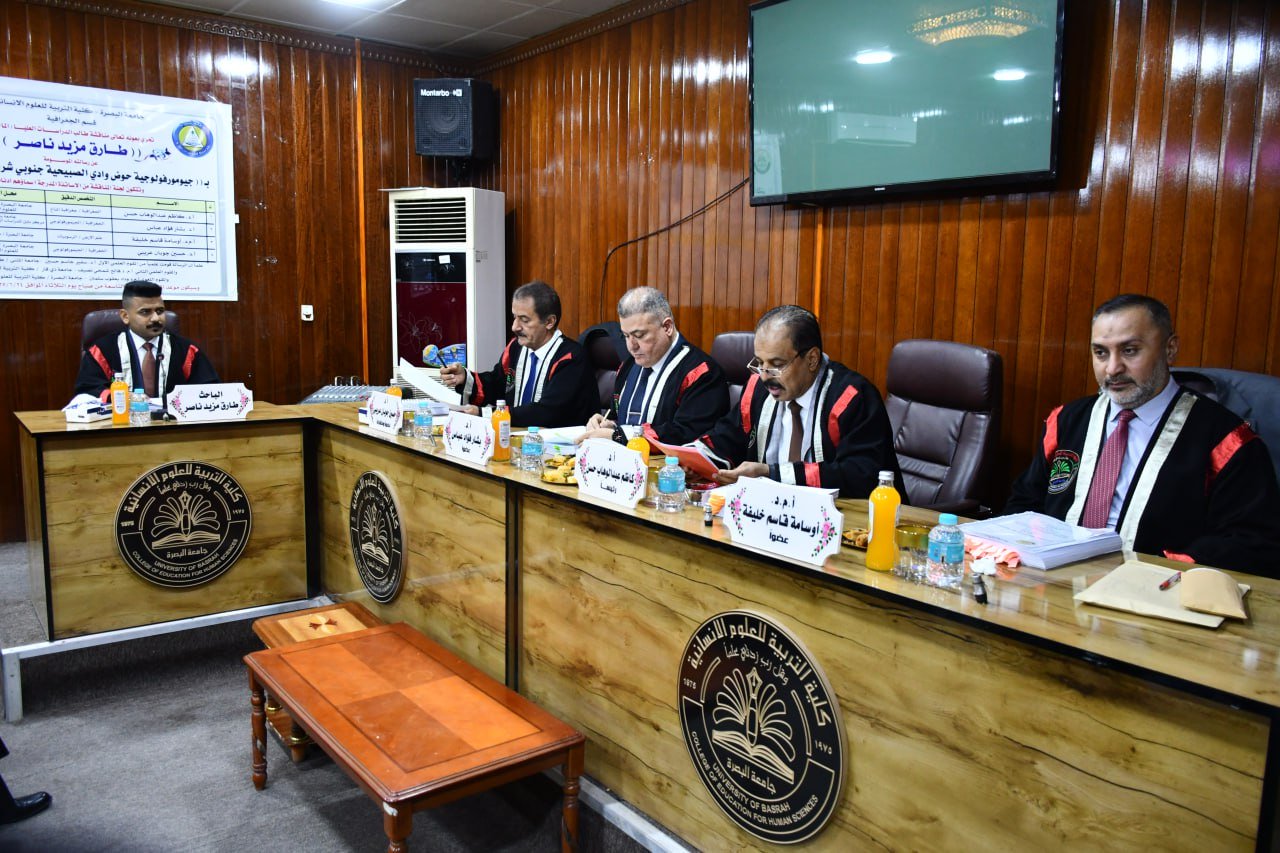
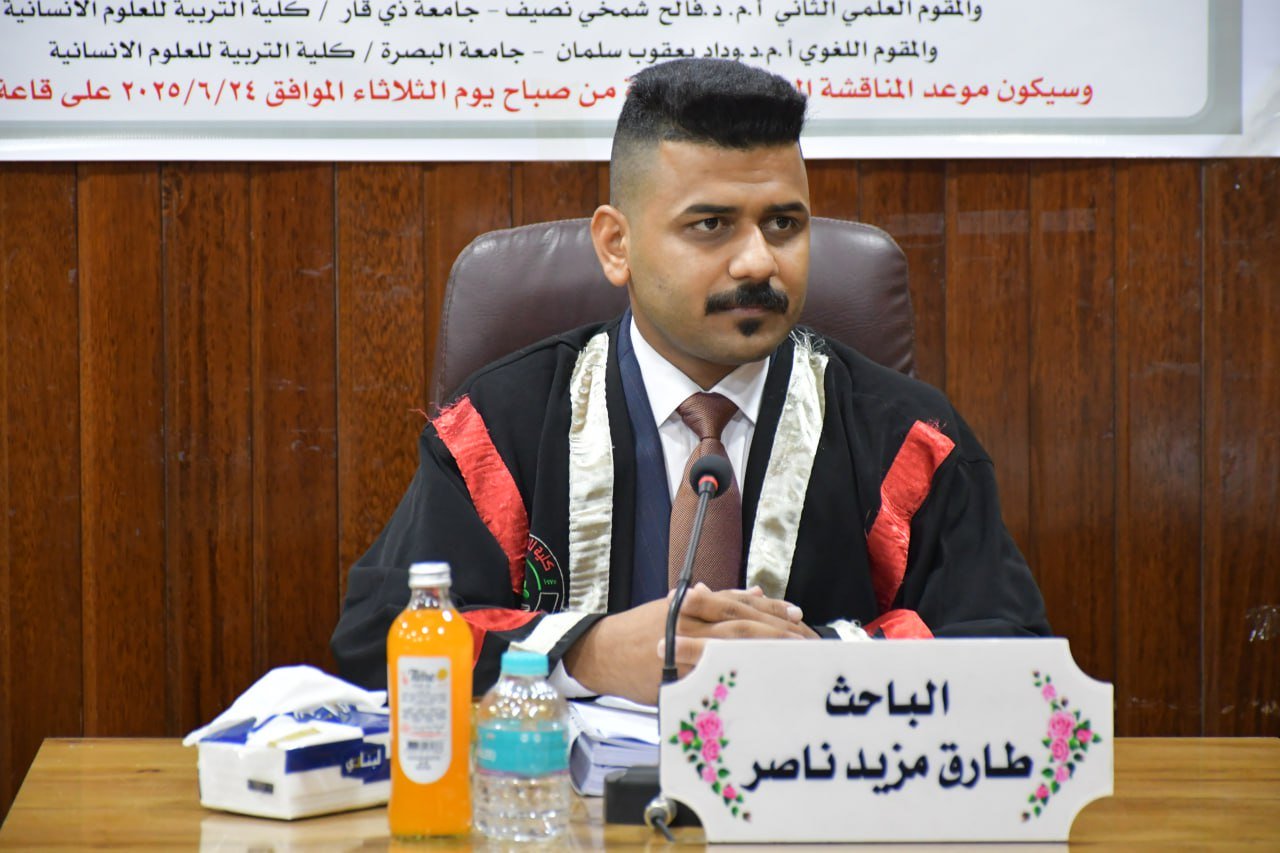
A master's thesis from the College of Education for Humanities at the University of Basra examined the geomorphology of the Wadi Al-Sabihiyah Basin, southeast of the Muthanna Desert. The thesis, presented by student Tariq Mazid Nasser, aimed to identify the geomorphological factors and processes responsible for the topography and shapes of the basin. It also aimed to identify and analyze the landforms found in the basin through geomorphological mapping. It also aimed to examine the impact of morphometric characteristics on the volume and distribution of sediments in the basin and the potential for exploiting the basin's natural resources. The study included five chapters, beginning with an abstract in Arabic and followed by a theoretical guide. It focused on studying the geographical factors influencing the natural and human geomorphological characteristics of the Wadi Al-Sabihiyah Basin, geomorphological processes and the basis for their classification, and the landforms resulting from geomorphological processes. The study concluded: The basin occupies an area of (139.25) km2 and a length of (33.25) km2. The Wadi Al-Subeihiyah basin is considered part of the stable shelf range, so the region was exposed to ancient tectonic movements with the help of external processes that contributed to the formation of the basin surface with the directions of its secondary basins. The geological formations of the region date back to the Tertiary formations (Upper Dammam Formation, Middle Dammam Formation), while the Quaternary formations include (depression-filling sediments, valley-filling sediments, and multi-origin sediments). Calcareous desert soils are the most widespread soils in the study area, as laboratory results showed that the soil of the study area is considered a sandy mixed soil with high permeability, as the area of barren lands amounted to (137.24) km2 of the total area of the basin