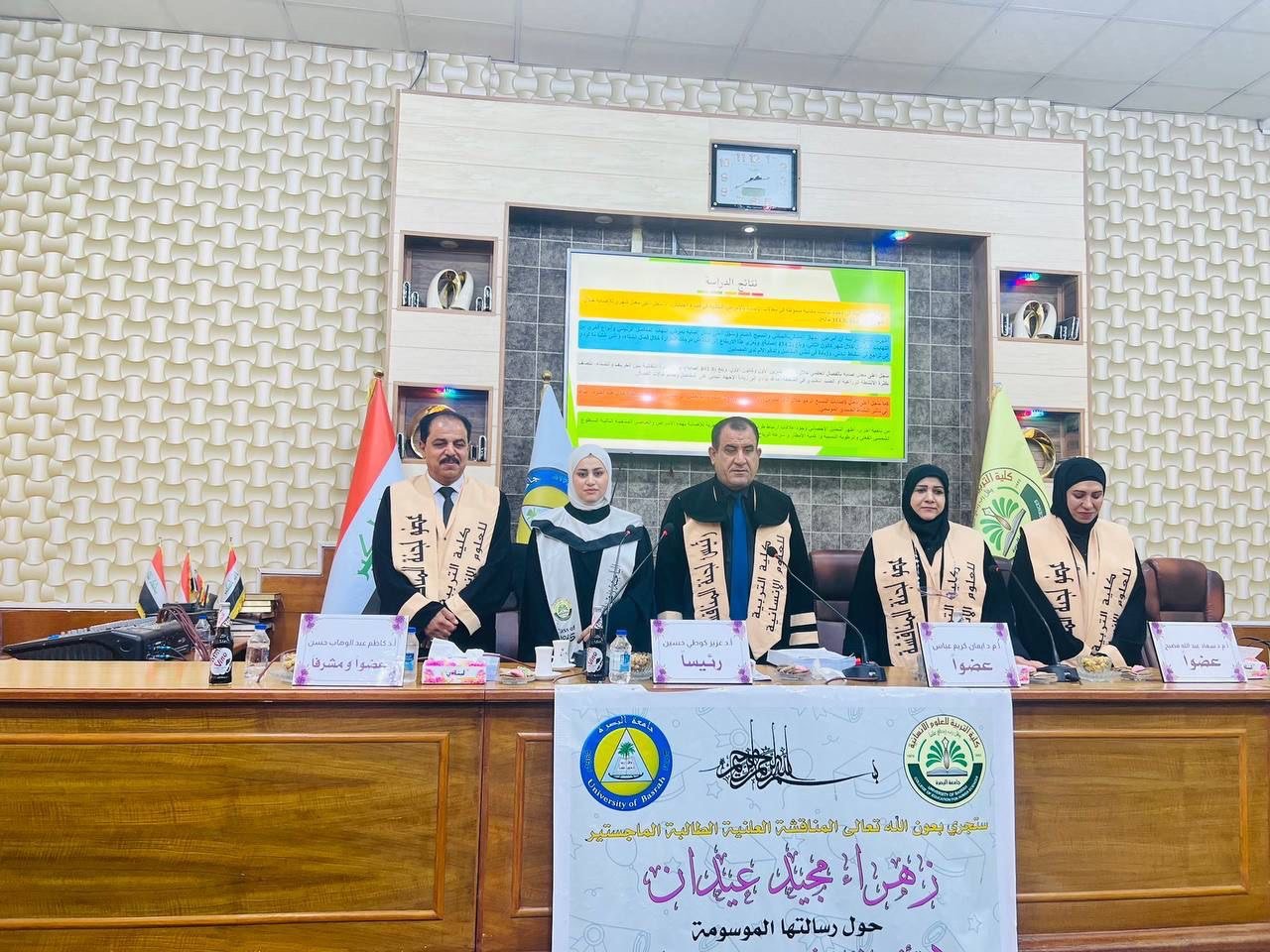
A master's thesis at the University of Basra examined the impact of climate on the comfort and illnesses of residents in Al-Jabaish District. The thesis, submitted by student Zahraa Majeed Eidan Al-Asadi, addressed a set of objectives, including highlighting the relationship between climatic characteristics (actual brightness, such as temperature, relative humidity, wind, dust storms, and rainfall) and the comfort of residents and the prevalence of certain diseases in Al-Jabaish District, while analyzing the temporal and spatial variations in this relationship.
The thesis also sought to identify the most influential climatic elements on human health and comfort, diagnose patterns of climate change and their impact on the geographic and temporal distribution of diseases, and analyze the resulting environmental and health causes and effects, as well as the extent to which climate change is linked to the increased severity or frequency of certain diseases.
The thesis demonstrated a significant variation in climatic effects across months and seasons. It also appeared that some climatic variables have a direct impact on the increased incidence of certain skin, respiratory, and joint diseases, as well as their repercussions on residents' comfort, especially during periods of high temperatures or dust-laden winds. The study also showed that the region's population is affected by climate, both in terms of the intensity of exposure and the pattern of response, demonstrating the importance of the spatial dimension in analyzing the phenomenon