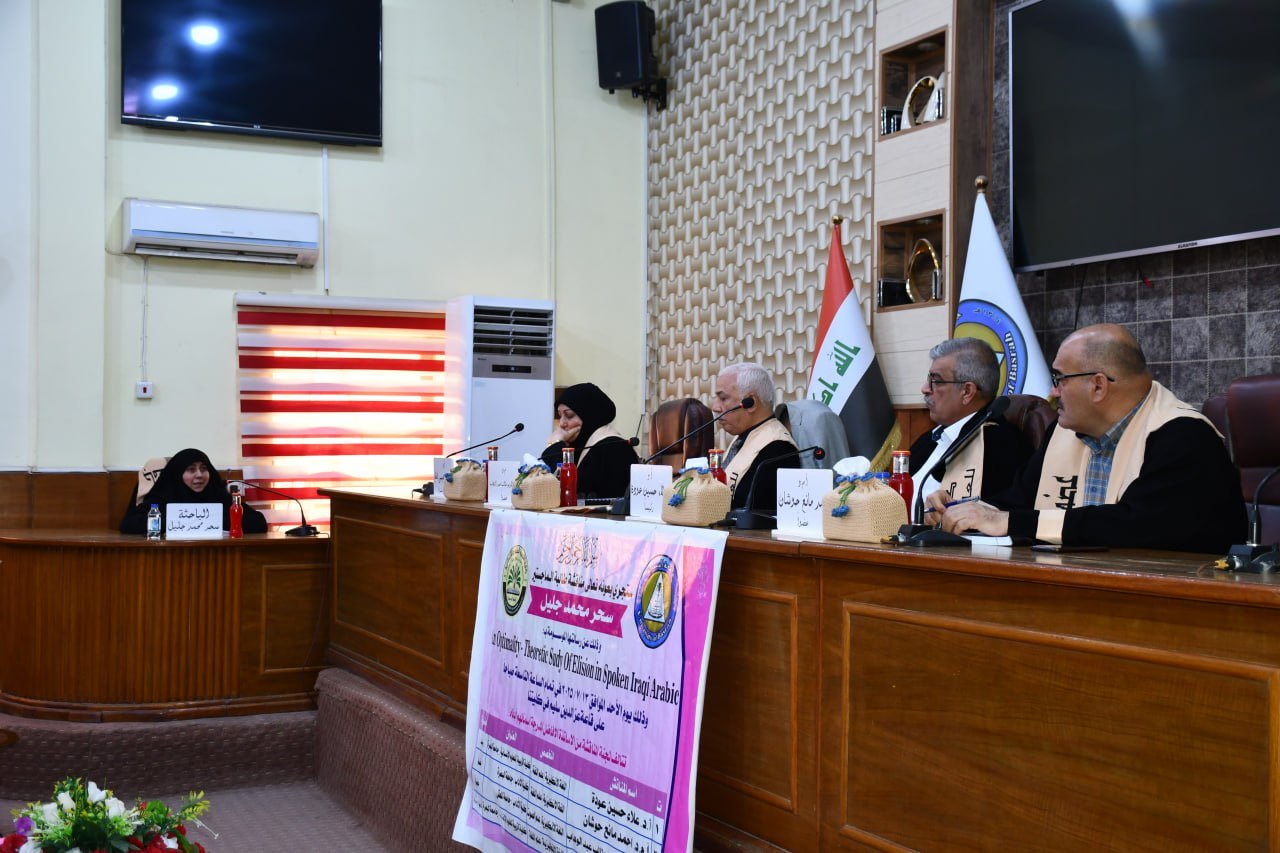
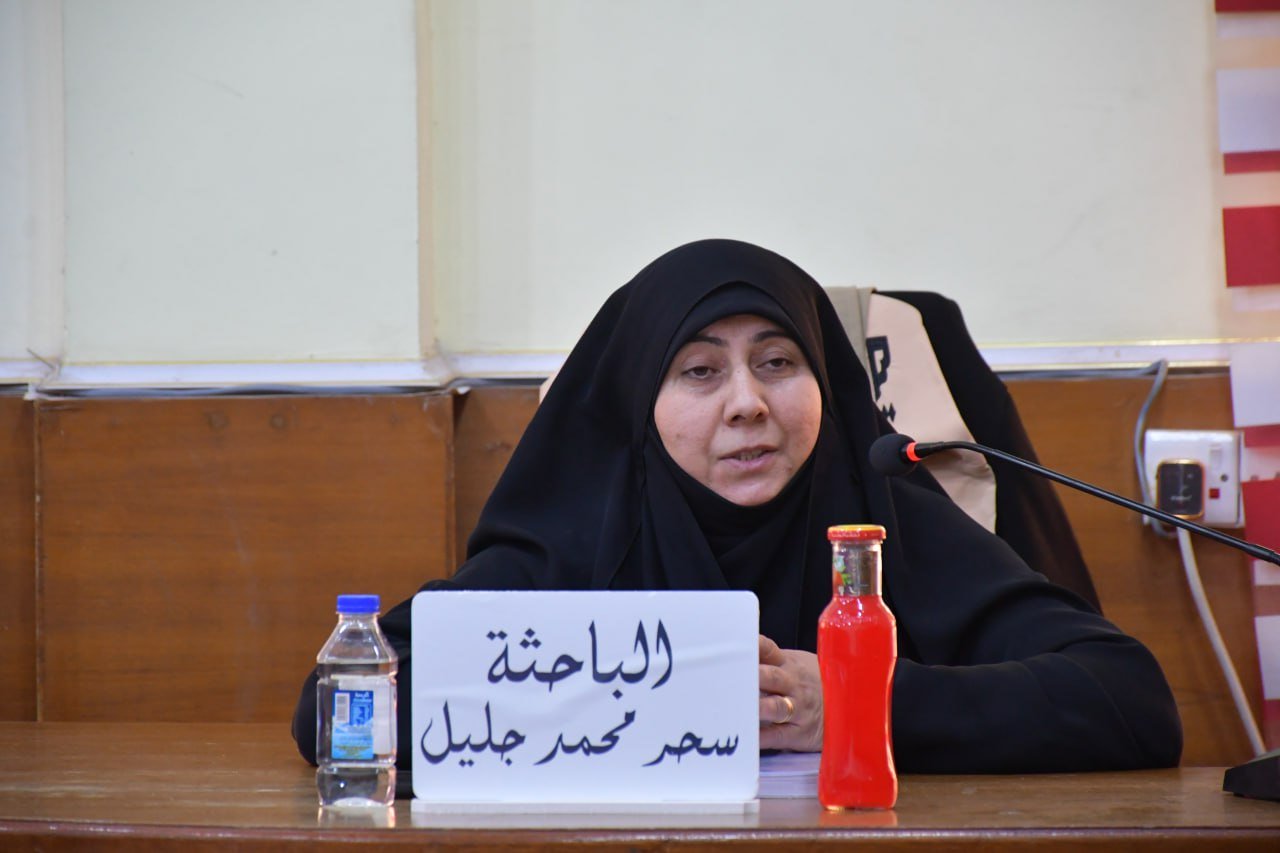
A master's thesis at the College of Education for Humanities at the University of Basra examined the phenomenon of phonetic deletion in spoken Iraqi dialect according to the theory of linguistic preference. The thesis, presented by student Sahar Mohammed Jalil, aims to demonstrate the success of the theory of linguistic preference in analyzing various types of phonetic deletion in spoken Iraqi dialect (historical, contextual, medial, and diacritical deletion), as well as to identify the controls that have the most significant impact on stimulating these deletions. It also seeks to identify the various parts of speech subject to deletion in spoken Iraqi dialect. Furthermore, this study investigates whether deletion is more common in monosyllabic or polysyllabic words, and to identify the sounds most susceptible to phonetic deletion. The thesis included that the linguistic trade-off theory is applicable to the analysis of different types of deletion in spoken Iraqi dialect. Some Faithfulness and Markedness controls, such as NUCi/u, ONS, MAX-IO, LATERAL-, FRICATIVE-, and -CODA, compete to produce the deleted output. It was confirmed that deletion in spoken Iraqi dialect is more likely to occur in polysyllabic words than in monosyllabic words. It was concluded that deletion is more prevalent in nouns and verbs (nominal and verbal phrases). It was also found that the most common deleted sounds are /i/, /h/, and /l/, respectively