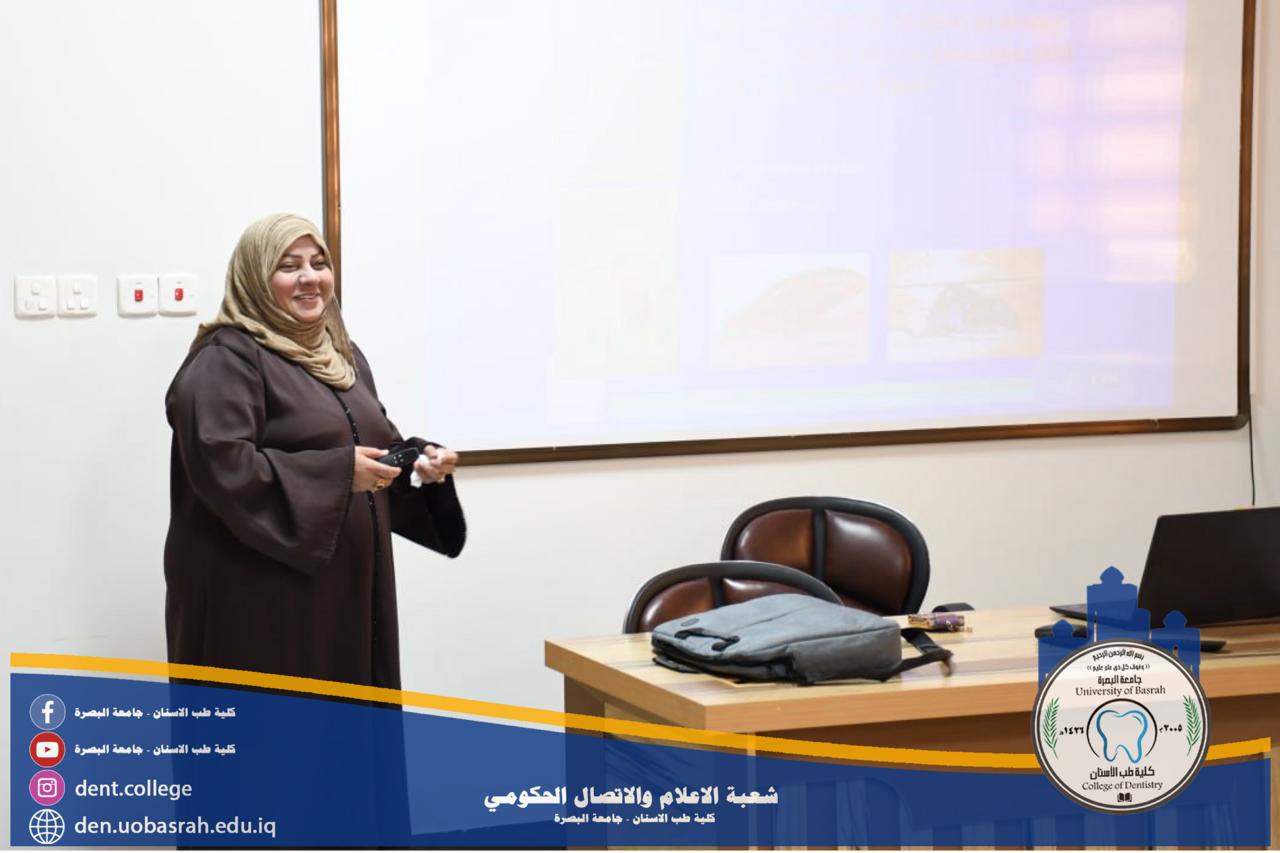
The College of Dentistry at the University of Basra organized a scientific lecture entitled “Disease Vectors: Hidden Enemies Behind Transmitted Diseases and How to Prevent Them,” to highlight the dangers of disease vectors and ways to reduce their spread.
The lecture, presented by Assistant Professor Hanaa Khazal Jaber, addressed the concept of disease vectors as living organisms that transmit pathogens from person to person or from animal to human, such as mosquitoes, flies, and ticks. She explained their role in transmitting a number of serious diseases, including malaria, dengue fever, and Zika fever, while also clarifying the mechanisms of transmission of these diseases and their health and economic impacts on communities.
The lecturer pointed to environmental and climatic factors that contribute to the increased spread of these vectors, such as high temperatures and stagnant water, as well as the role of certain human behaviors in increasing the likelihood of infection.
The lecture included a presentation on the most important preventative measures, including improving environmental hygiene, eliminating insect breeding grounds, and using personal protective equipment such as insecticides and mosquito nets. It also emphasized the importance of promoting health awareness and community cooperation to reduce the spread of vector-borne diseases.
This lecture aims to raise health and environmental awareness and promote a culture of prevention within the university community, thereby contributing to reducing the spread of diseases and protecting public health.
