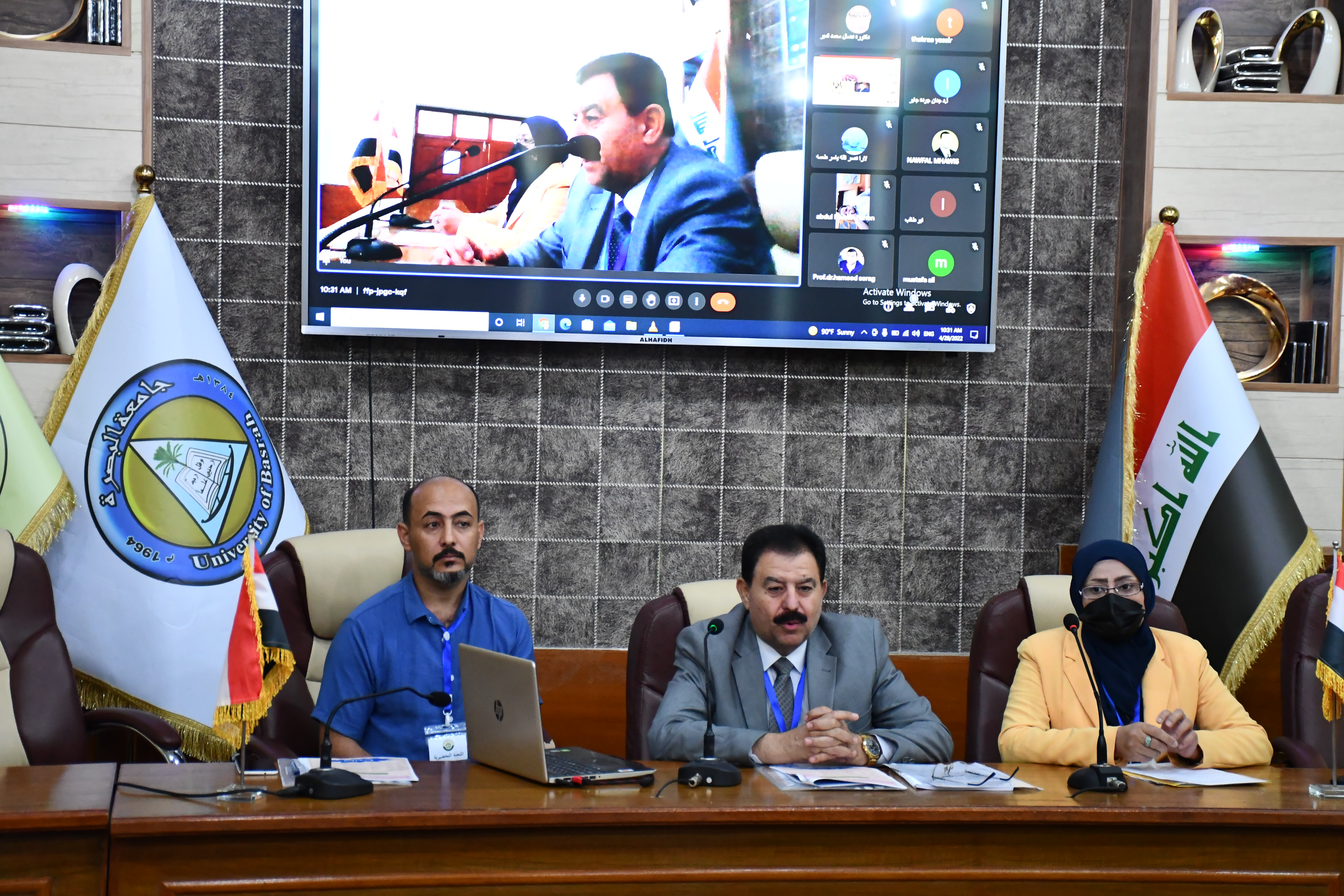
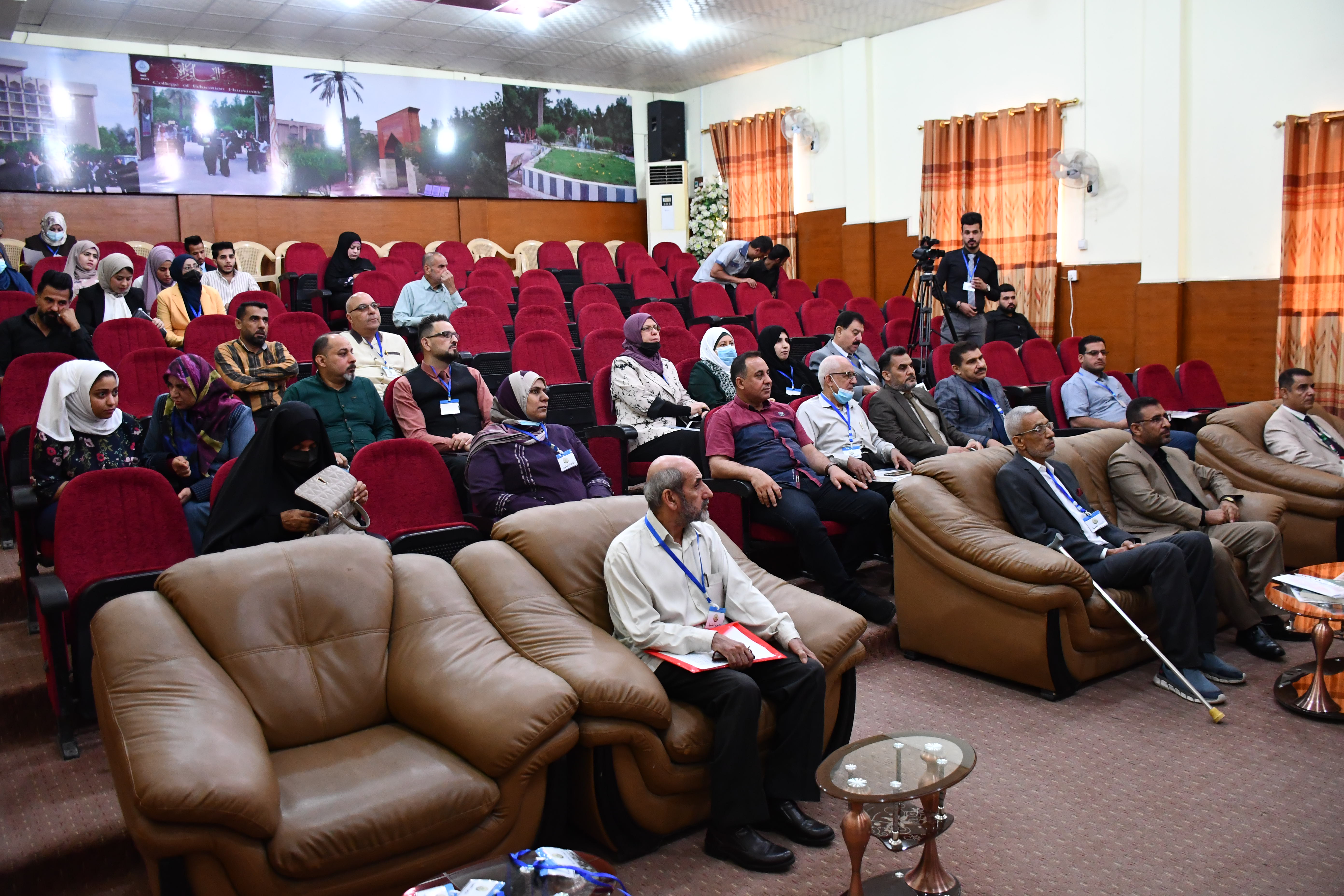
The aim of the conference was to increase awareness of visual heritage at the academic and societal levels, as well as draw the attention of researchers to the importance of heading towards this heritage and highlighting it through individual studies for that, and through the attention of state institutions to the importance of making decisions and enacting laws to advance the visual reality in a holistic and integrated manner, With a realistic consideration of the developments and developments that Basra witnessed in the cultural, social, economic and political fields and the impact of this on the present and future Basra society.
The conference started with its themes that built the participating research in accordance with, and the first axis was about Basra in Islamic thought, and the second axis talked about the population diversity in Basra and its importance in promoting peaceful coexistence, and the third axis showed the impact of Asian and Western trends and currents in Basra society The last axis talked about the challenges that Basra faced throughout history.
The conference concluded with a set of recommendations, the most important of which was to highlight the bright side of Basra in all fields, and at the level of all academic and popular elites, as well as the need to activate the role of the Archaeological Studies Unit in the college and specialized centers to focus on visual topics in research studies, as well as the basic role of history departments in The University of Basra in reviving the intellectual impact of the archaeological monuments in Basra, and not being satisfied with the abstract material aspect. Among the important recommendations is what stressed the need to pay attention to the antiquities of Basra and open up prospects for cooperation between the University of Basra and the Directorate of Antiquities to oversee their protection, and the establishment of museums worthy of them; To be centers of attraction for archaeological and recreational tourism, and to encourage researchers to direct their research to highlight the historical roots of the economic, social, health and humanitarian problems of Basra, which contributes to supporting development projects in the city. Basra’s development projects, by inviting government institutions, visual families, civil libraries, and those who own manuscripts, drawings and maps to deposit them in a bank of manuscripts, photographs and documents to preserve the heritage of the city of Basra, and the need to invest the (20%) of the methodological vocabulary to include Basra’s history, impact, giving and study philosophy as an expression On its development and pride in its living heritage to highlight national visual attitudes over time and to employ them effectively.