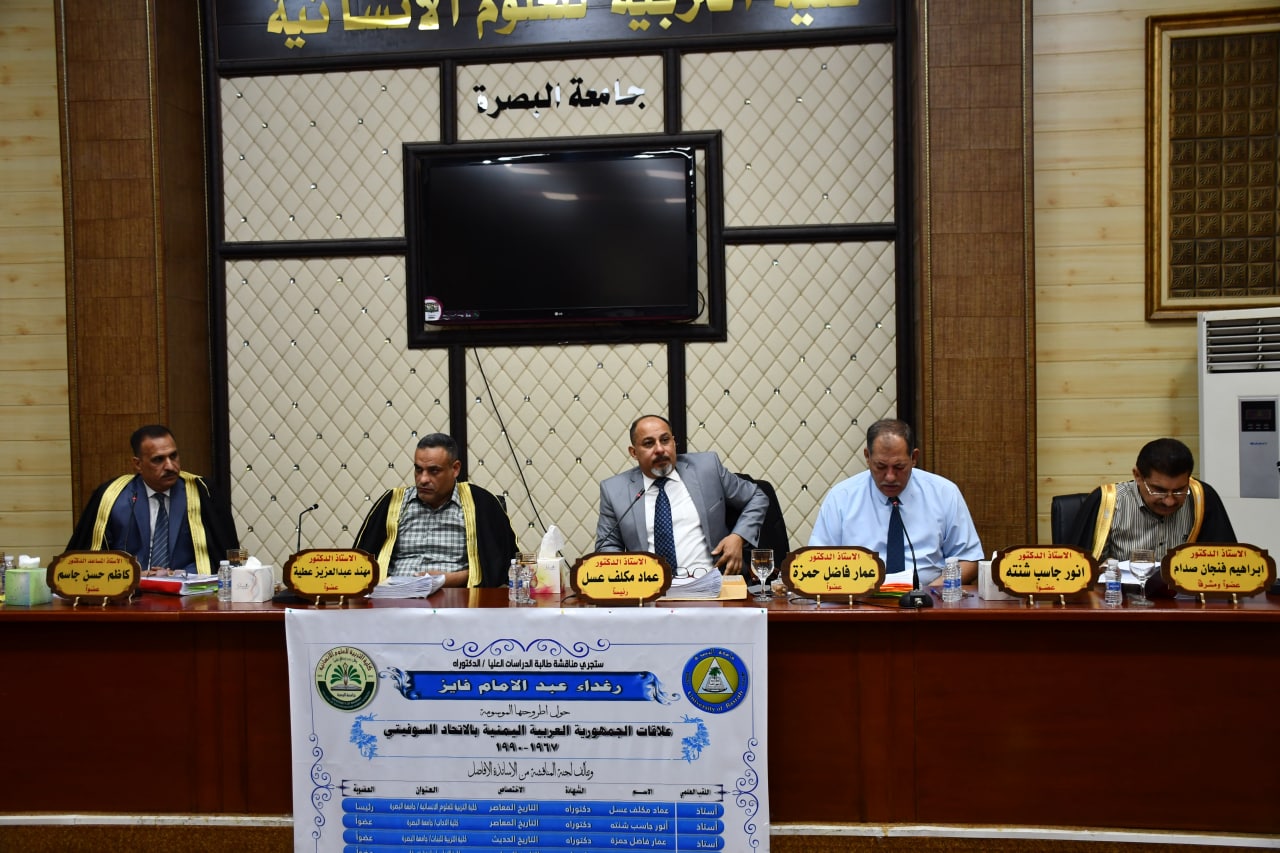
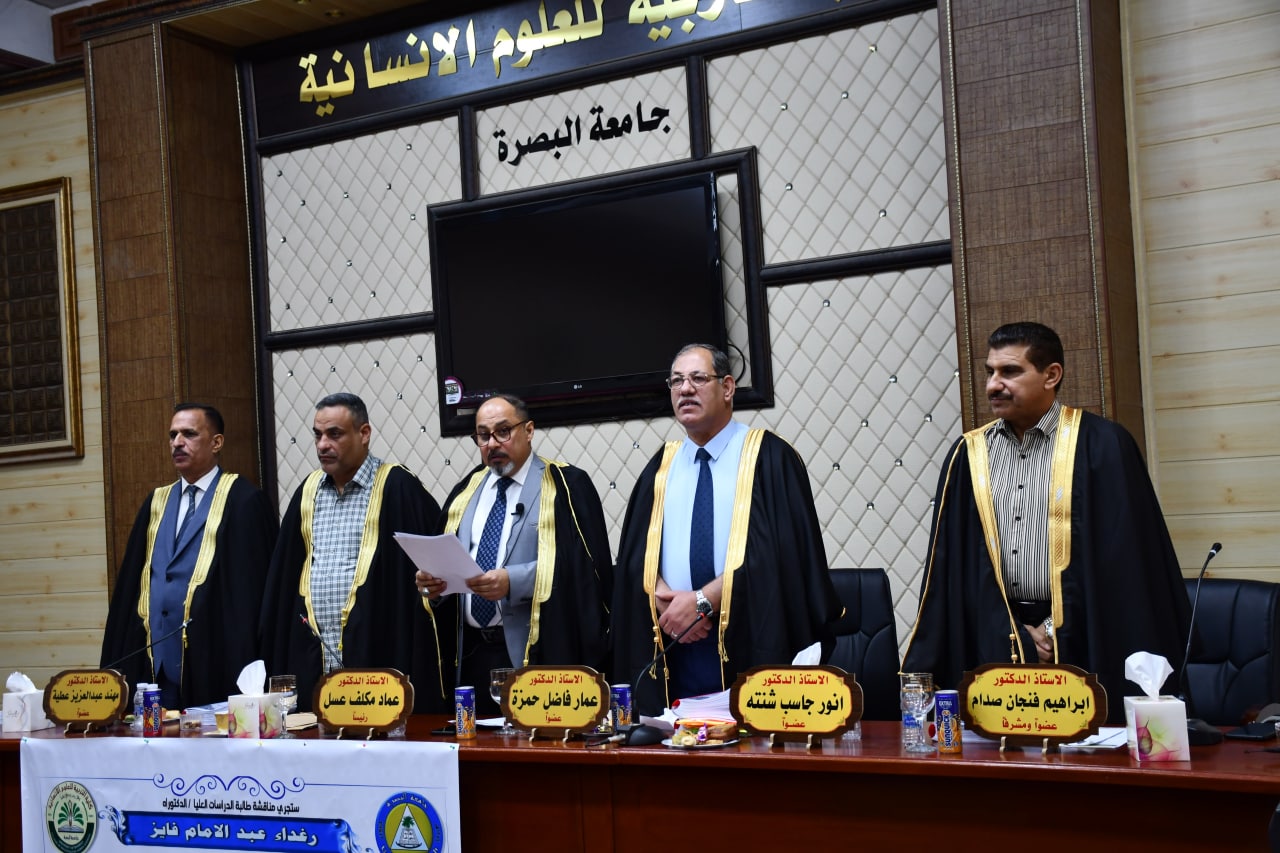
PHD thesis in the Department of History / College of Education for Human Sciences, University of Basra - Thesis title (Relationships of the Yemen Arab Republic with the Soviet Union 1967-1990) The thesis dealt with ... (The Yemeni-Soviet relations gained their importance from the historical relationship that linked (North Yemen) to the Soviet Union, since The first half of the twentieth century This relationship is one of the oldest relations of the Soviet Union with the Arab countries, which was characterized by the depth of ties and interests between the two countries, and the issue of relations between the Yemen Arab Republic and the Soviet Union is one of the vital issues, given the great international power represented by the Soviet Union. The leadership of the eastern camp in the Cold War conflict with the western camp led by the United States of America).
The study aimed to clarify the course of the relations between the Yemen Arab Republic and the Soviet Union in the light of the internal, regional and international political changes that accompanied these relations during the historical period 1967-1990, and to reveal the stages of their development, establishment and improvement, and the stages of their decline, and an attempt to identify the most important determinants and influences that I directed this path from the political, military, economic and cultural aspects.
The study was divided into an introduction, a preface, five chapters, and a conclusion.
The preface briefly traces the course of relations between the Yemen Arab Republic and the Soviet Union since the victory of the Yemeni revolution in 1962 to 1967.
The first chapter is devoted to examining internal and regional developments and their repercussions on the Yemeni-Soviet relations 1967-1970.
As for the second chapter, it presented the political developments in the Yemen Arab Republic and their reflection on relations with the Soviet Union from 1970-1974.
The third chapter came to show the course of the Yemeni-Soviet relations during the eras of al-Hamdi and al-Gashmi 1974-1978.
As for the fourth chapter, it came under the title of Soviet-Yemeni relations after Ali Abdullah Saleh took power in July 1978-1990.
The last chapter focused on studying the economic and cultural relations between the two sides for the period 1967-1990.
The conclusion included the most important results that the researcher reached by tracking the course of relations between the two countries, the course of political events and the developments that affected and reflected on them.
The thesis concluded (that most relations in the international system are based on common interests, and the relationship of the Yemeni Arab Republic with the Soviet Union does not depart from that framework, each of them has interests that those relations enable him to achieve. The policy of the Yemen Arab Republic during the study period was characterized by fluctuation and fluctuation between the two camps Saudi Arabia and the West on the one hand, and the Soviet Union on the other, and this political pattern continued to be associated with the external trends of Sana’a.(