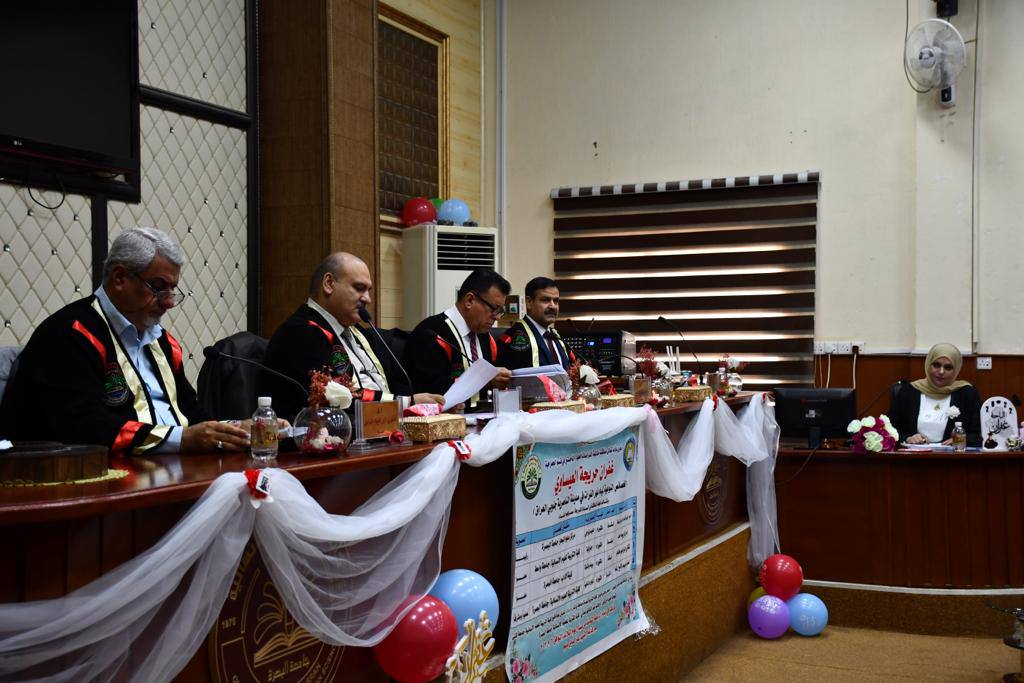
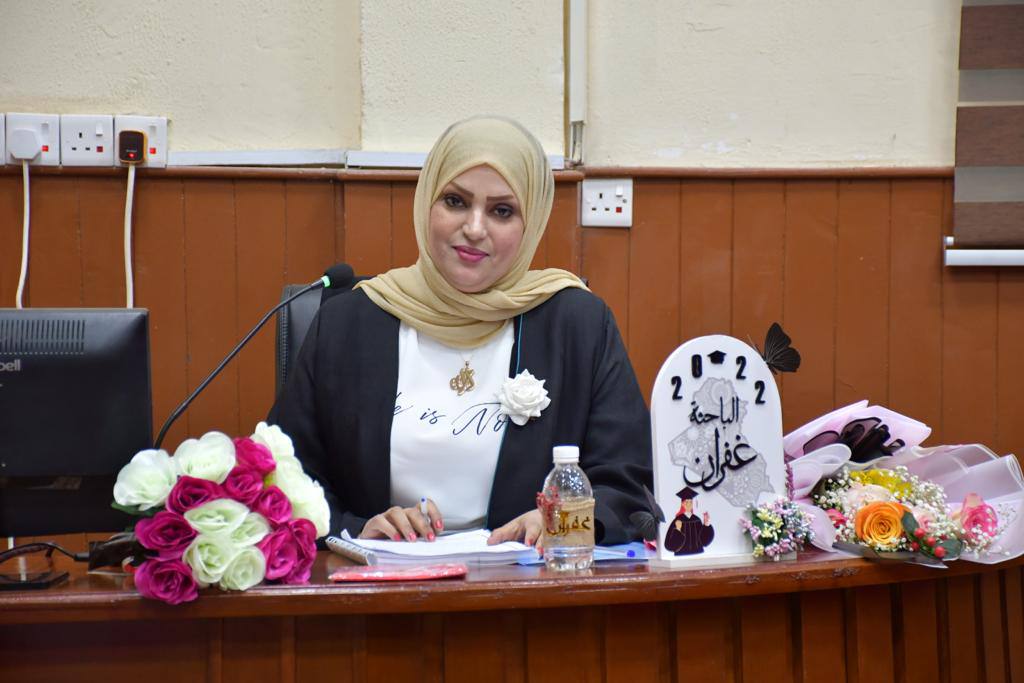
A master’s thesis in the Department of Geography, College of Education for Human Sciences, University of Basra, examined (Qualitative characteristics of the waters of the Euphrates River in the city of Nasiriyah - southern Iraq) by the student Ghufran Harijeh Shaliout.
The thesis dealt with determining the qualitative characteristics of the water of the Euphrates River within the city of Nasiriyah and showing the levels of the main ions and heavy metals dissolved in the water of the river and their spatial and temporal variations, revealing their main characteristics and determining their suitability for different uses. Time, which negatively affects the quality of water and its suitability for various uses, and this is what calls specialists in all fields to study this phenomenon to reveal its spatial variation and the types of salts dissolved in water and to identify the main sources of salts.
The thesis included five chapters as well as conclusions and suggestions. The first chapter included the introduction and a statement of the importance of the topic and its problem, methods of work and the duration of the study. The second chapter was shortened by describing the study area, which included the natural and human characteristics in the study area, while the third chapter was devoted to clarifying the main sources of water pollution in the city of Nasiriyah. As for the fourth chapter, it was concerned with determining the qualitative characteristics of the salts of the Euphrates River water and its spatial and temporal variation for the water year 2021-2022, while the fifth chapter focused on evaluating the suitability of the Euphrates water for various uses.
The thesis concluded that the water available in the course of the Euphrates River within the Dhi Qarhi Governorate is originally of high salinity, as the concentration of total dissolved salts in the water of the Euphrates River in the Al-Mansuriyah and Asdinawiya study stations varies 2076.0 - 2566.7 mg / liter, respectively.
The rates of pH values in the waters of the Euphrates River fall within the permissible limits for human drinking according to the Iraqi specifications and the World Health Organization. The total dissolved TDS in the Euphrates river water is outside the permissible limits for human drinking according to the Iraqi specifications and the World Health Organization, and the rates of concentration of sodium Na, rates of magnesium For human drinking according to Iraqi standards and the World Health Organization
By carrying out laboratory work and analyzing samples of heavy metals in the waters of the Euphrates River, it appears clearly that the levels of dissolved heavy metals in the river water and for all studied metals except for lead are below the Iraqi and international standards, as the values vary between 0.013 and 0.0095 mg/liter for cadmium and lead, respectively. . The presence of many of the studied metals may be absent in some seasons, especially nickel, cadmium, zinc and copper. All heavy metals dissolved in water are of low concentration except for lead.