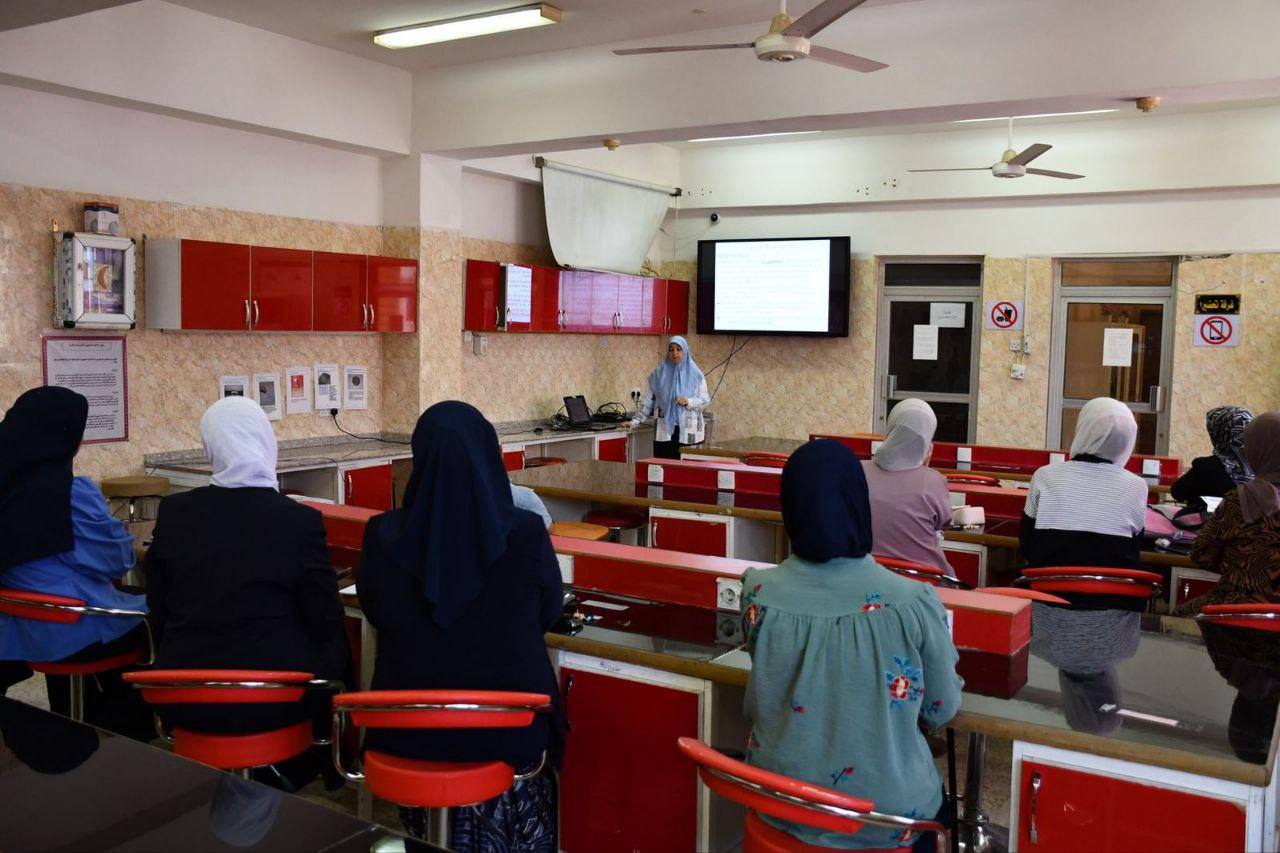
The College of Medicine at the University of Basrah organized a lecture on the Blastocystis which was presented by Dr. Ban Anas.
The research aims to study many aspects of Blastocystis, the most important of which is its rate of spread and the most important methods used to diagnose the parasite and study its relationship to diseases of the digestive system. Blastocystis is a common intestinal parasite in humans worldwide. It is a genus of single-celled parasites consisting of several species that live in the gastrointestinal tracts of species as diverse as humans, farm animals, birds, rodents, reptiles, amphibians, fish, and cockroaches. Blastocystis was initially classified as a yeast, but later it was subclassed as Sporozoa.
The presence of Blastocystis humanis in the intestine may be asymptomatic and cause acute or chronic symptoms, due to pathogenic and non-pathogenic genotypes.
It is worth mentioning that many studies have been conducted in many Iraqi governorates regarding this parasite.
