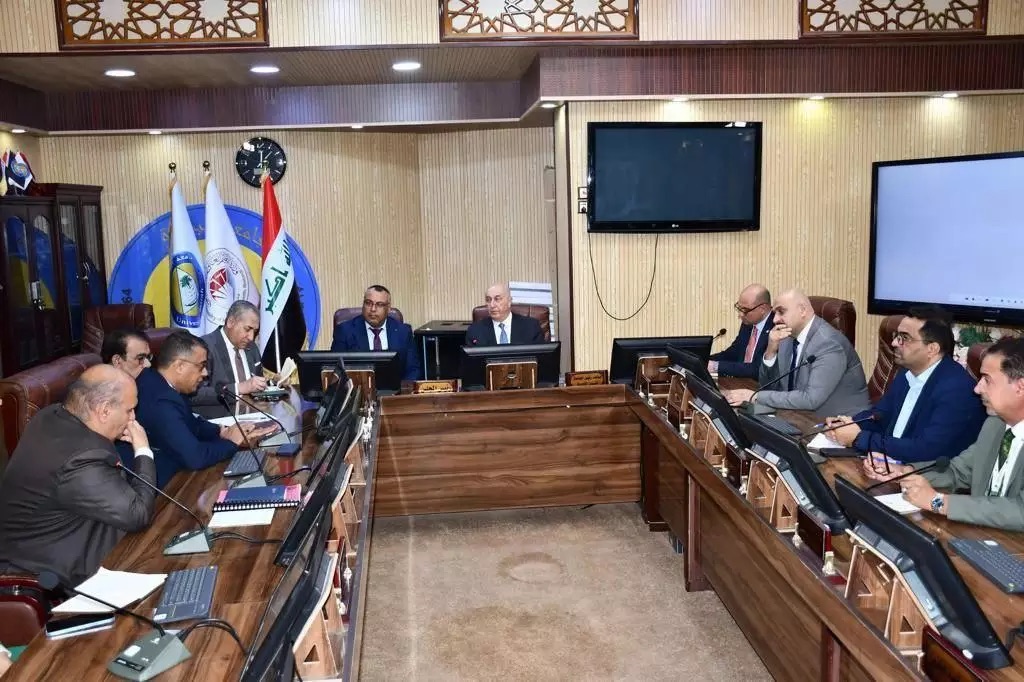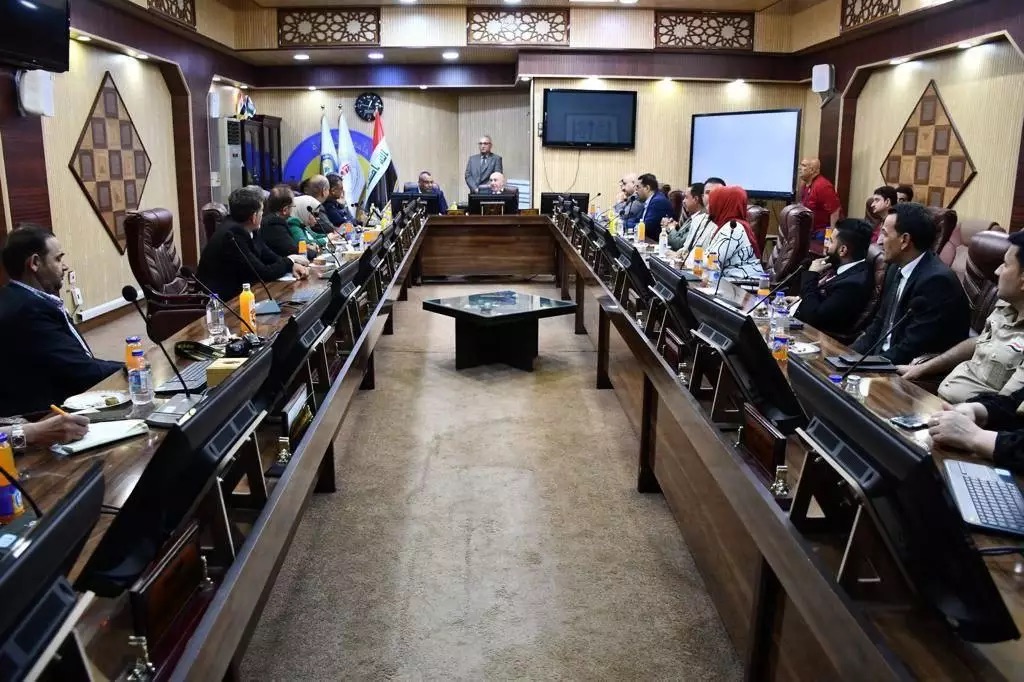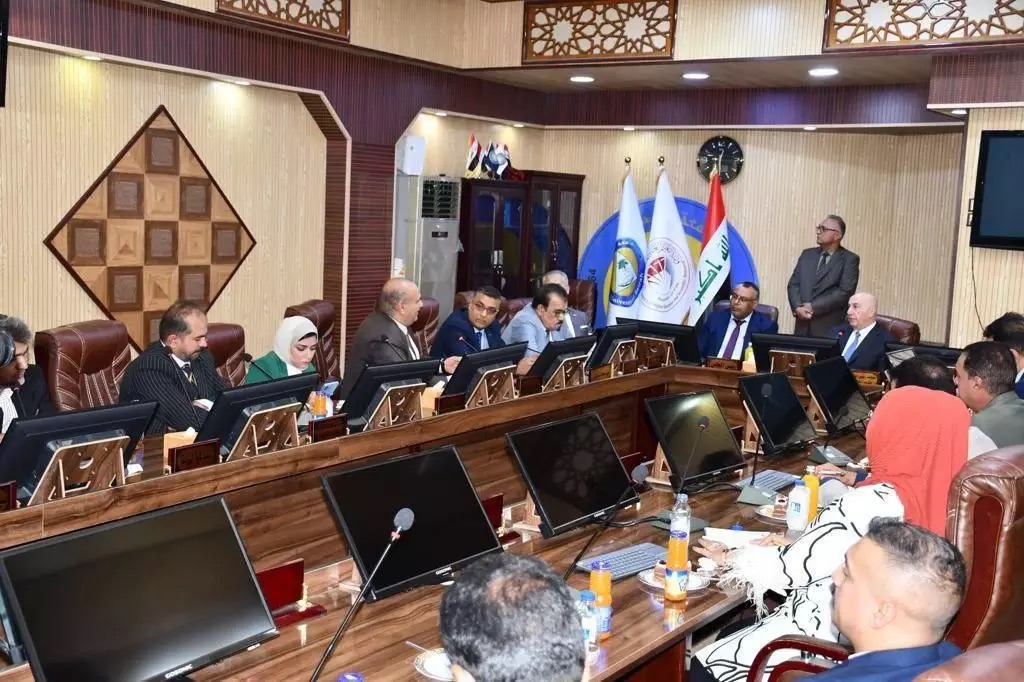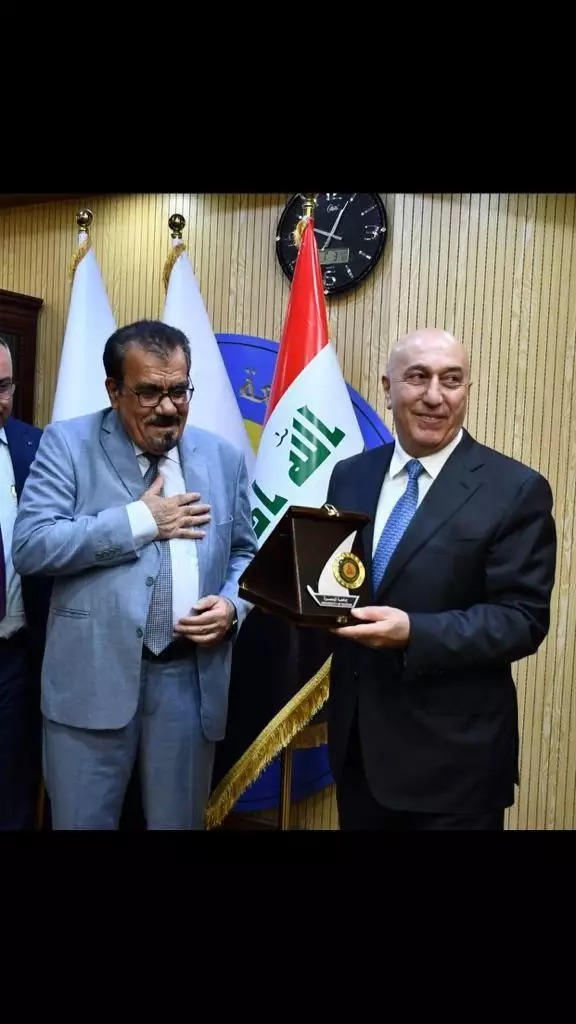
The Vice-President of the University of Basrah, Dr. Falah Hassan Shri, and his assistants for scientific and administrative affairs, Dr. Muhammad Hamza Abbas and Dr. Ali Hudhi Diab, received the Minister of Environment, Eng. Nizar Amidi, and his accompanying delegation, in the presence of the environmental team of the university and a number of specialists.
During the meeting, the achievements of the University of Basrah in the environmental field and the latest research and studies presented on the water and soil pollution file, as well as the waste file, were reviewed.
The Minister of Environment stated that the Ministry is a monitoring and awareness-raising body, and the University of Basrah is a house of great expertise and the best support, and we must take the first step to address many important matters according to priority and in accordance with scientific and international standards.
Amidi added, “Basra was declared free of radiation, and we set a budget for the file of clearing the lands of mines, and we will start from Basra due to the urgent need to exploit larger areas and allocate them for housing and projects, in addition to the ministry’s endeavor to re-evaluate the treaties and agreements signed by Iraq.”
The Vice-President of the University of Basrah, Dr. Falah Hassan Shri, indicated that a specialized environmental team was formed from the university to collect samples of environmental pollutants, and they were analyzed and special reports were prepared to be presented to the competent authorities.
In an intervention with the Minister of Environment, the Director of the Center for Marine Sciences, Dr. Abdul-Zahra Abdul-Rasul Al-Helou, raised several topics, including the importance of cultivating the mangrove plant because of its environmentally friendly qualities, which the University of Basrah succeeded in cultivating in an experimental field, as well as the existence of cooperation with the Regional Organization for the Protection of the Marine Environment. He also talked about close monitoring of the Shatt al-Arab environment, in addition to the governorate's need for a regulatory dam to rid itself of the extension of the salt wedge.