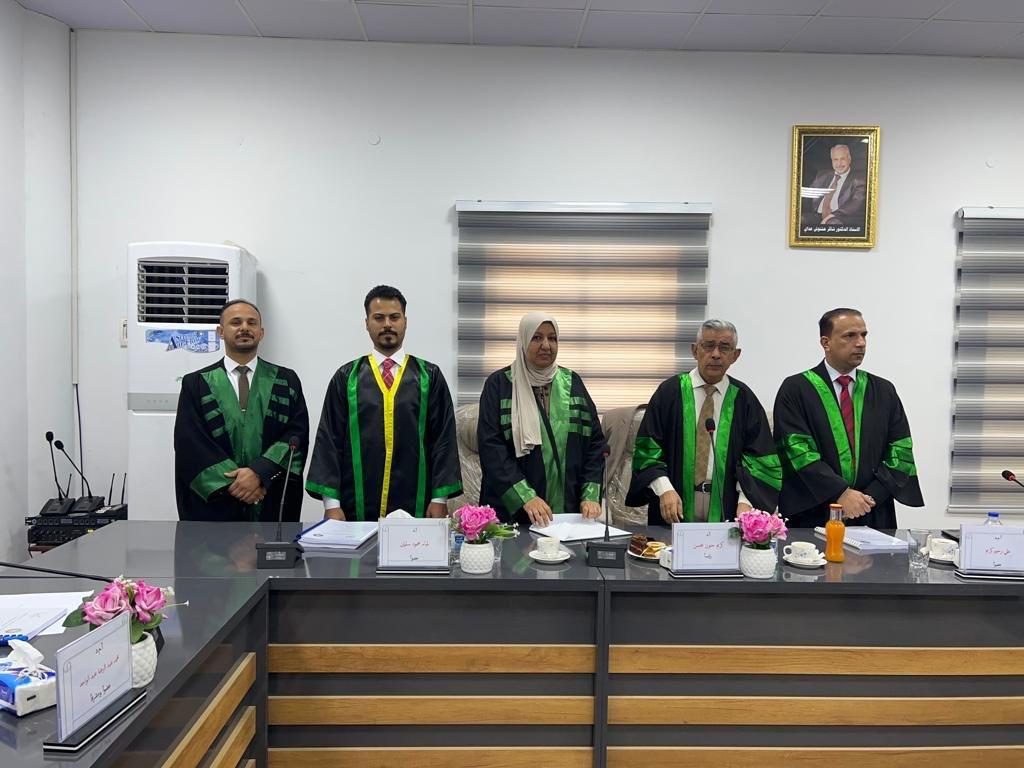
A master's thesis at University of Basrah discusses the effect of varieties and nitrogen fertilization on the growth, yield, and components of rye wheat (X Triticosecale wittmack)
A master's thesis at the College of Agriculture at University of Basrah discussed the effect of varieties and nitrogen fertilization on the growth, yield, and components of rye wheat (X Triticosecale wittmack).
The researcher Al-Hakam Mamoun Rashid’s thesis included a study of four levels of nitrogen fertilizer (0, 100, 120, 140) kg N ha-1 and three varieties (Amal 7, Farah and Muhannad).
The results of the experiment showed that nitrogen fertilizer levels had a significant effect on all traits, as the fertilizer level exceeded 140 kg N ha-1, as the highest rate was recorded for some traits and yields. As for the effect of varieties, the Amal 7 variety excelled in most of the traits of the study.
The message aimed to determine the best level of nitrogen fertilizer and the best type.
The letter recommended the possibility of growing the rye wheat crop, variety Amal 7, under the conditions of Basra Governorate, with the use of nitrogen fertilizer at a level of 140 kg N ha1-
Subsequent studies were conducted for other varieties with the use of higher levels of the quantity added in the study due to the presence of a response from the crop, which led to an increase in the yield in quantity and quality.
Conducting subsequent studies in other areas of Basrah Governorate, such as in sandy lands, to determine crop production in these areas.
Department of Media and Government Communication