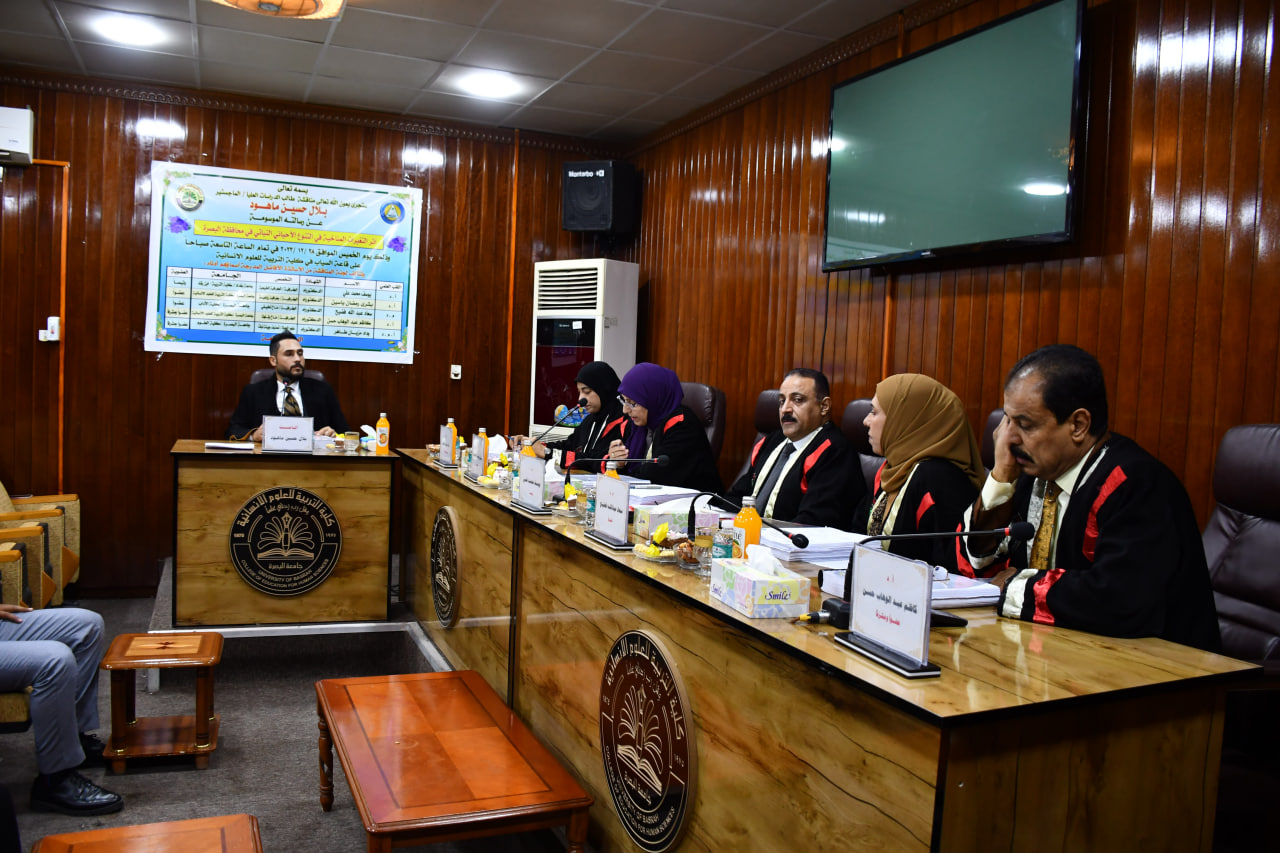
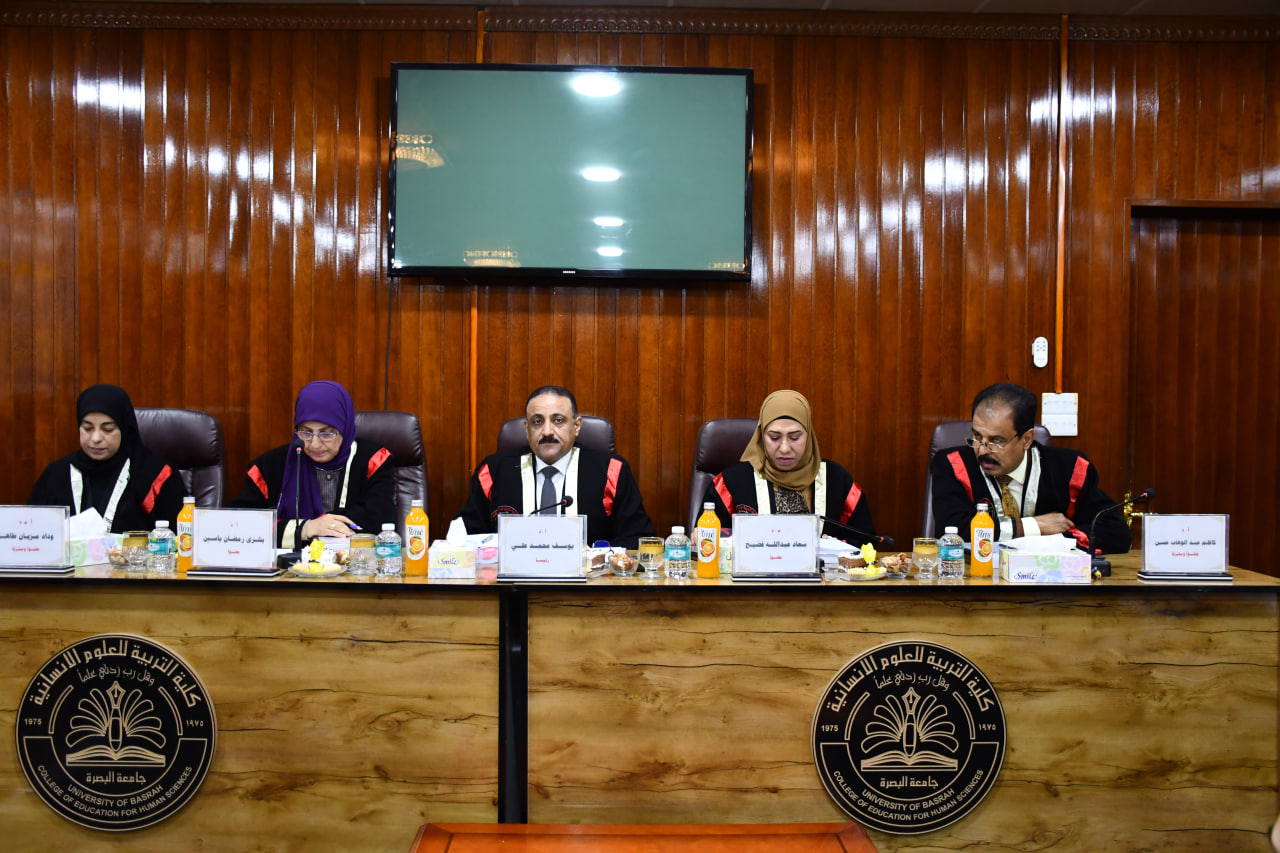
A master’s thesis in the Department of Geography / College of Education for the Humanities / University of Basra examined the impact of climate change on plant biodiversity in Basra Governorate, by the student (Bilal Hussein Mahood Fahd).
This will be on Thursday, 12/28/2023, at nine o’clock in the morning in Al-Sayyab Hall.
The study addressed one of the most important and largest problems at the present time, represented by climate change and its accompanying negative effects on the most important natural resources, namely the crop structure in terms of (yield, productivity, area) and natural vegetation in Basra Governorate.
The study included five chapters. The first chapter dealt with the introduction and dealt with the research problem, its hypothesis, its goal, the importance, justifications, the limits of the research, the method of work, the research methodology and structure, and similar studies. The second chapter dealt with the concept of climate change and the environmental effects that resulted from it, as well as the changes that occurred in the climate of Basra Governorate, according to a period from (1950-2022). The third chapter is concerned with studying the impact of climate changes on changing crop composition in terms of (area, yield, and productivity) and for the period (1983 - 2022). While the fourth chapter dealt with the impact of climate changes on changing the natural vegetation cover for the period (1964 - 2022), during which the natural vegetation cover, its importance and the extent to which it was affected by climate changes were identified, which played a major role in the extinction of a huge number of plant species that were prevalent in the environment of the study area. The plants were divided into each category under a specific classification that suits the nature of the plant and how it is studied. The fifth chapter is concerned with studying the correlations between plants and climatic elements that have a direct impact on their growth, using multiple statistical analysis (CCA) and the statistical program PAST4.03.
The study concluded that the changes that affected the climatic elements had negative effects represented by a reduction in cultivated areas and a decrease in the area, yield and productivity of crops, in addition to the diseases that affected them due to the availability of a suitable environment for them as a result of high temperatures and lack of rainfall, as well as the extinction and threat that affected the natural vegetation cover. The extinction of many plant species or the emergence of a number of new species.