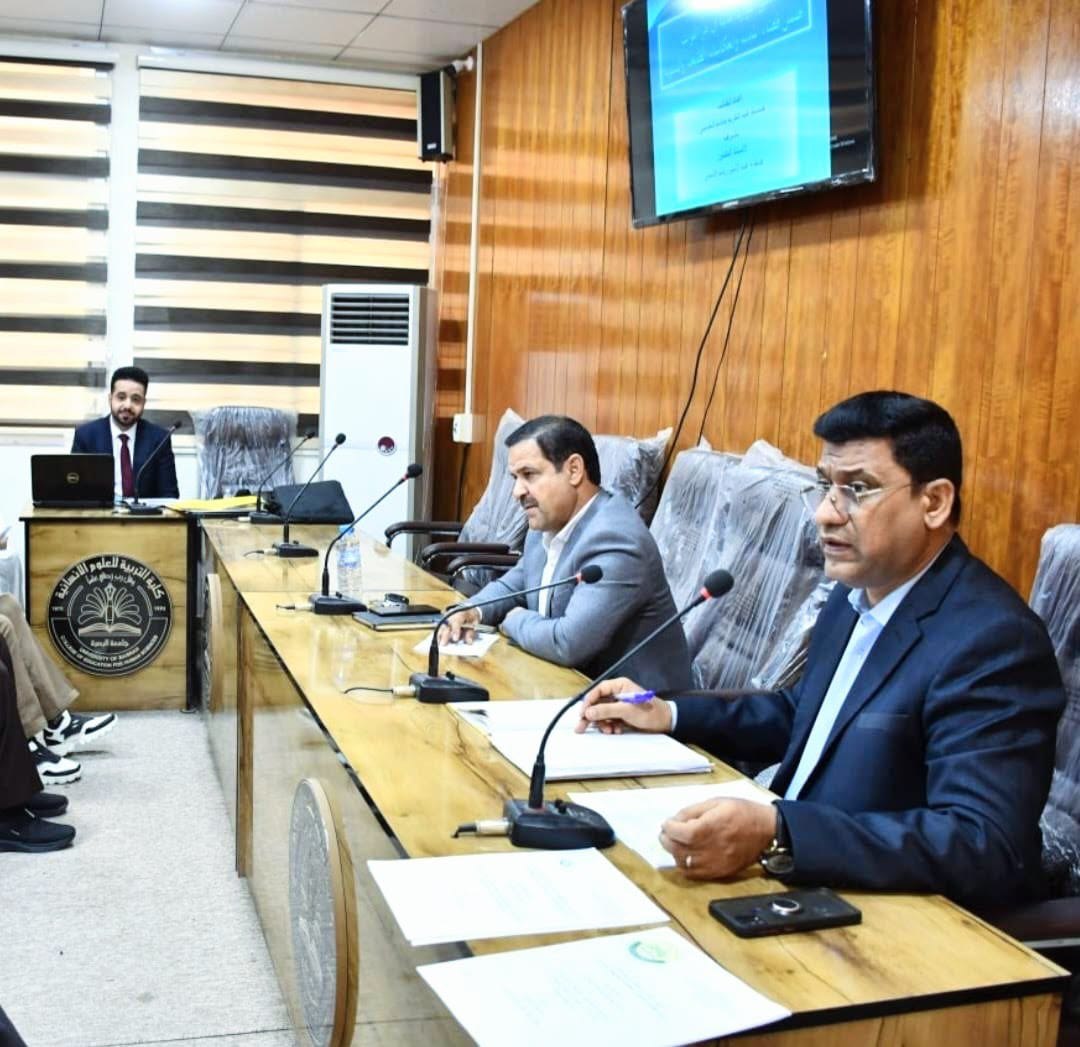
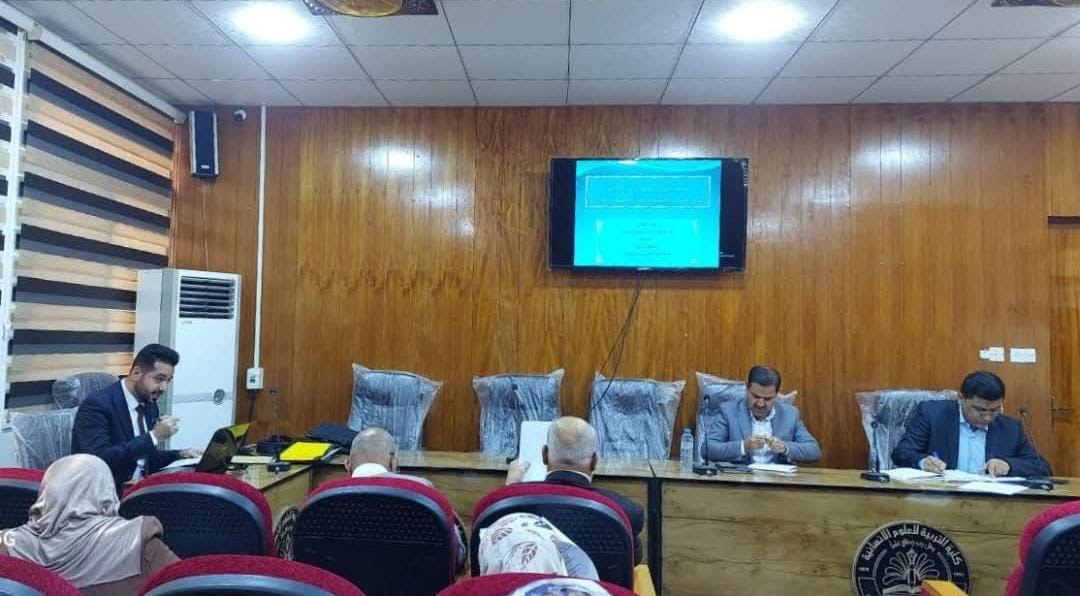
The Geography Department at the College of Education for Human Sciences - University of Basra organized a panel discussion on the deterioration of water resources in the Euphrates River within the city district and its natural and human repercussions.
The workshop aimed to determine the amount of deterioration that occurred in the water of the Euphrates River in terms of quantity and quality, and the effects of this deterioration on humans, their health, economic activity, migration, soil degradation, agricultural production, and aquatic organisms.
The seminar, presented by graduate student Hossam Abdel Karim Jassim, included a description of the city’s district in terms of astronomical and geographical location, geological structure, soil, natural vegetation, water resources in the district, agricultural and industrial activities, the drainage of the Euphrates River, the deterioration that occurred in the amount of drainage, the impact of the discharge amounts of the Euphrates River, and the hydrological projects that The construction of neighboring countries on the river and the extent to which the amount of discharge has been affected by these projects, represented by dams.
The symposium showed the qualitative characteristics of the water of the Euphrates River, the high salinity rate, and the effects on human health and diseases as a result of the quantitative and qualitative change in the water of the Euphrates River, which is its most important water resource, as well as the impact of aquatic organisms and the extinction of specific types of fish and river plants, and the relationship of this deterioration to soil and agriculture.