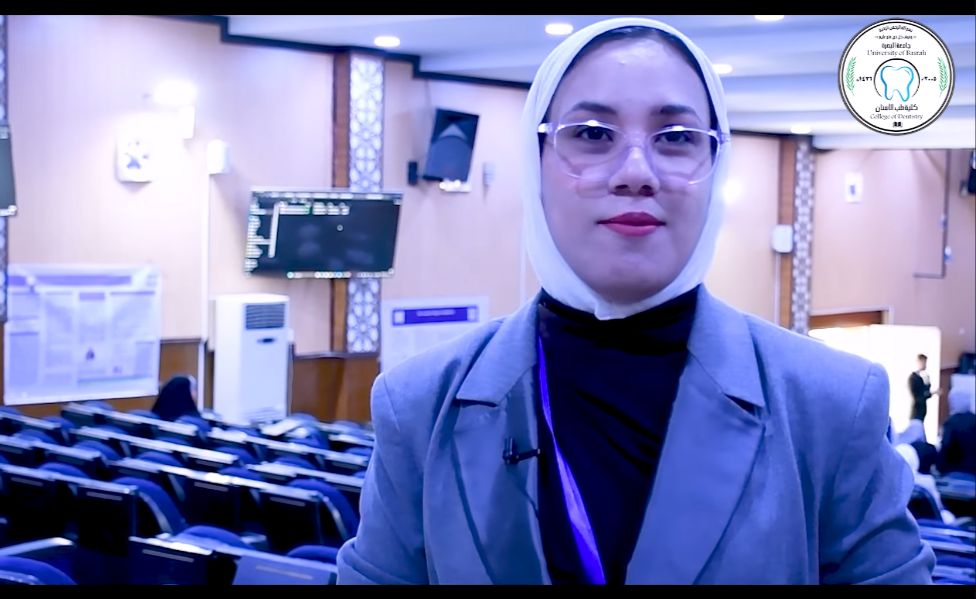
Dentistry College at Basra University held the first conference entitled “Science and Innovation,” where researcher Heba Allah Khaled Abdel Zahra presented her research entitled "Next-Generation Sequencing in Hematologic malignancies: impact on Diagnosis and Treatment"
Next-generation sequencing (NGS) is a powerful technology that has increased our ability to understand the genetic heterogeneity of hematological malignancies. It has been used to identify new and important disease genes, and also in the development of taxonomic molecules that have strong evidence of clinical benefit for integrated routine use.
Precision medicine (NGS) testing for hematological malignancies could lead to more personalized treatment and a better understanding of the biology of the disease. NGS can be used to classify hematological malignancies using whole genome sequencing (WGS), which becomes a powerful clinical tool for the management of blood cancers.
Diagnostic applications of NGS:
Hematological malignancies are based on genetic aberrations/mutations, especially large ones, which are the basis of the different phenotypes in the spectrum of leukemia diseases. NGS techniques have been applied to blood disorders in a variety of contexts:
1) Guideline diagnosis (rearrangement of TCR genes to create T-cell clones)
2) Subclassification (recurrent cytogenetic translocations in acute myeloid leukemia)
3) Prognosis (Philadelphia chromosome positive in acute lymphoblastic leukemia).
MRD is a minimal residual disease test (BCR–ABL transcripts in chronic myelogenous leukemia), which often allows new mutations to be identified. Because leukemias, lymphomas, and myeloma are constantly evolving, MRD identifies mutations. Additional common factors that may have great clinical prognostic value and importance.
How do new discoveries translate into new treatments?
Several novel somatic mutations, such as SF3B1, IDH1, IDH2, DNMT3A, MYD88 and MLL2 have been identified as a result of NGS efforts, which have led to the discovery of previously unreported genes and molecular processes/pathways involved in pathogenicity. Genomic profiling of each cancer is likely to play a major role in early diagnosis of the disease and selection of the most appropriate treatment. One of the most emblematic examples is AML, which greatly affects the clinical side. The mutations were previously characterized in
FLT3, NPM, RUNX1 and CEBPA, in addition to the recent identification of mutations in
IDH1, IDH2, DNMT3A and TET2 encourage the incorporation of genomic studies as part of routine clinical testing which has been able to optimize treatment plans based on the patient's genomic background.
In conclusion: NGS has revolutionized the diagnosis and personalized treatment of malignant myeloid tumors, but caution is necessary when interpreting its results in a clinical context. The clinical value of NGS varies across different myeloid entities, with AML benefiting from comprehensive analysis on limited molecular panels, identifying crucial mutations such as RUNX1, IDH1, and IDH2. In MDS, molecular analysis enhances prediction beyond cytogenetics, while MPNs benefit from NGS in confirming clonal disorders and improving risk profiles. Germline variants must be distinguished from disease-associated mutations, and persistent mutations during treatment may indicate clonal hematopoiesis. Molecular MRD diagnostics are expected to expand, requiring comprehensive monitoring for polyclonal responses. Clinicians should proactively screen for mutations in relapsed patients to identify emerging therapeutic targets. Collaboration between hematologists, pathologists, and laboratory specialists is vital to ensure accurate interpretation of NGS results and improve patient care in malignant myeloid neoplasms.
