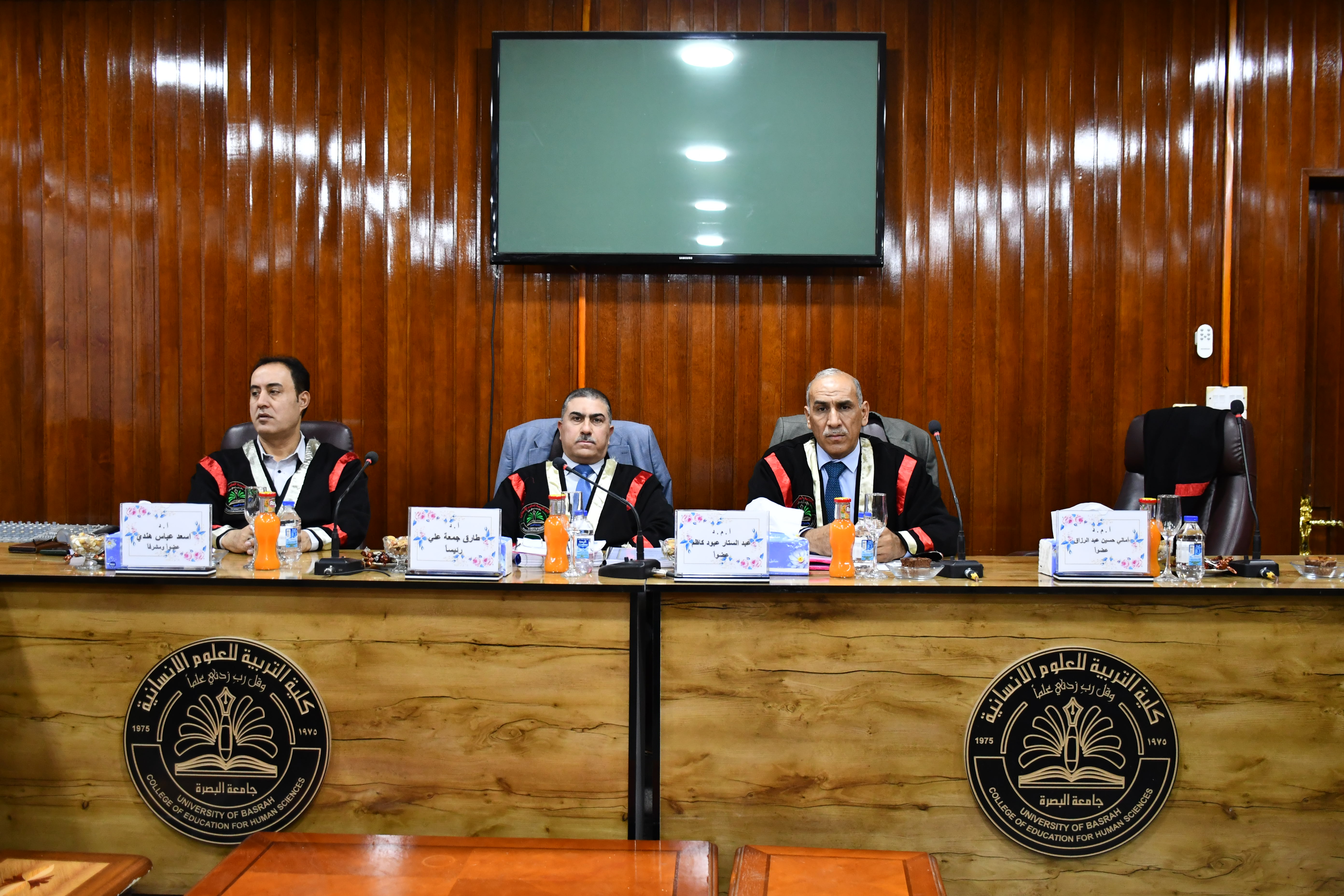
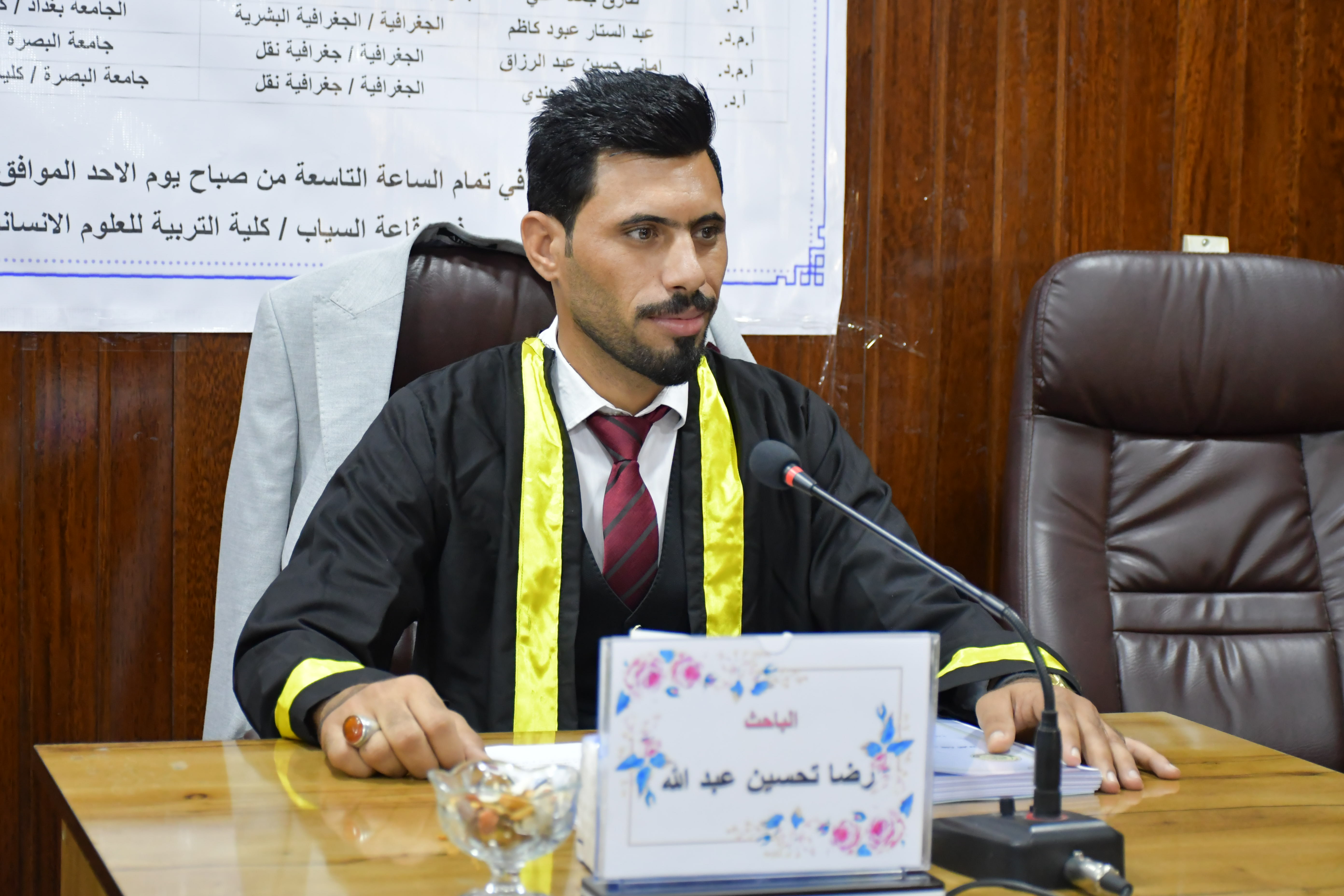
The master's thesis in the Department of Geography - College of Education for Human Sciences, University of Basra - The spatial distribution of fuel stations in Al-Qurna District - by the student Reda Tahseen Abdullah
The thesis presented by the student Reda Tahseen Abdullah aims to study the spatial distribution of fuel stations in Al-Qurna District through description, analysis and conclusion. The main objective of preparing this thesis was to shed light on the spatial distribution of fuel stations and the extent to which a balance is achieved between the spatial distribution of fuel stations and the distribution of the population in Al-Qurna District, in addition to identifying the efficiency of fuel station services in light of the population increase witnessed by the study area. The thesis included four chapters. The first chapter dealt with the historical development of fuel stations in Al-Qurna District, in addition to studying the development of the number of cars in the district. In order to shed light on the historical development of fuel stations, it was studied in the form of two historical stages. The second chapter was devoted to studying the geographical factors (natural and human) affecting fuel stations in Al-Qurna District that contributed to choosing the locations of the stations. The third chapter shed light on the economic importance of fuel stations in Al-Qurna District. The fourth chapter was devoted to studying the future expectations of fuel stations in Al-Qurna and what the future status of fuel stations will be, and relying on appropriate statistical methods to confront these developments. The thesis concluded several results, the most important of which is that the number of fuel stations belonging to the private sector witnessed a significant increase, especially after 2003, by (13) stations out of the total number of stations operating in the district. The reason is that the private sector took it upon itself to establish these institutions after the government sector stopped investing in this field since the end of the nineties and to keep pace with the steady increase in the number of vehicles