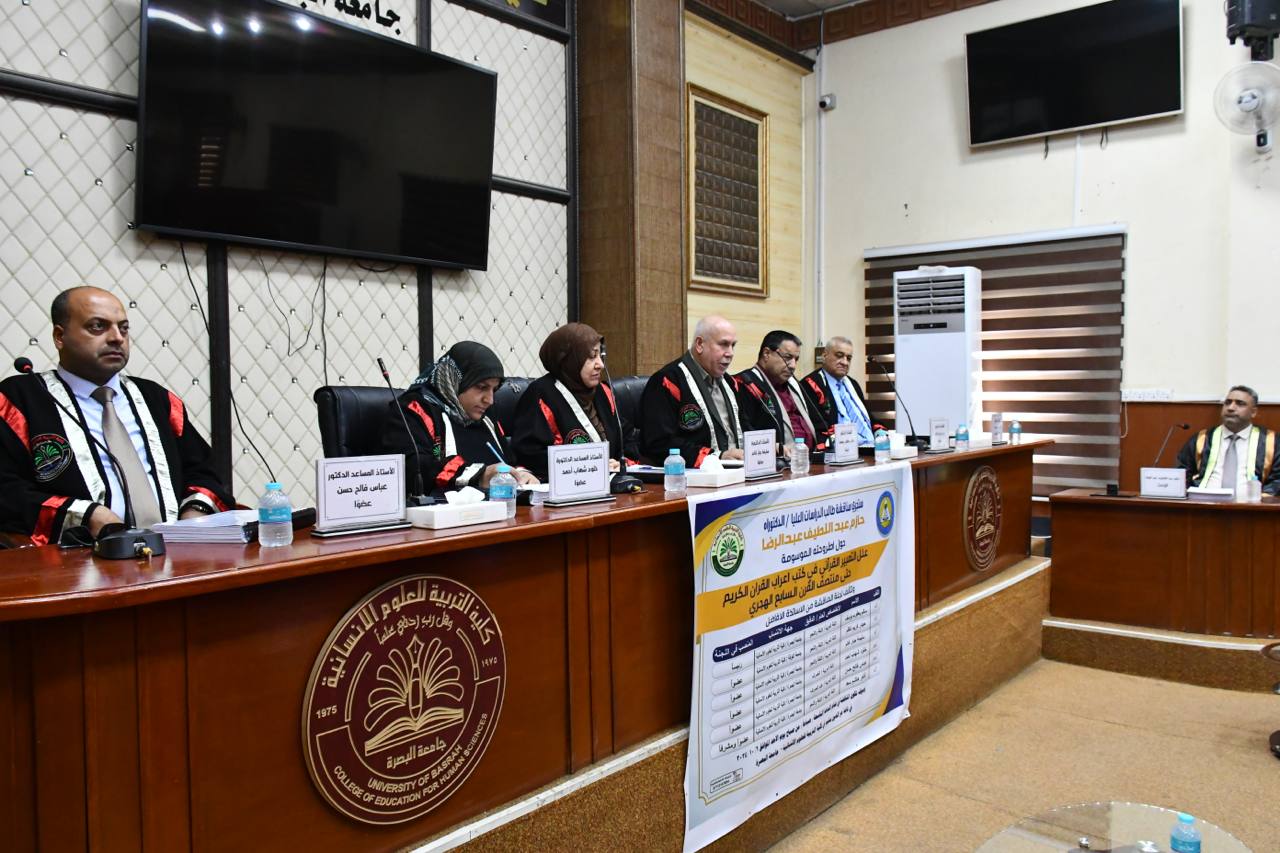
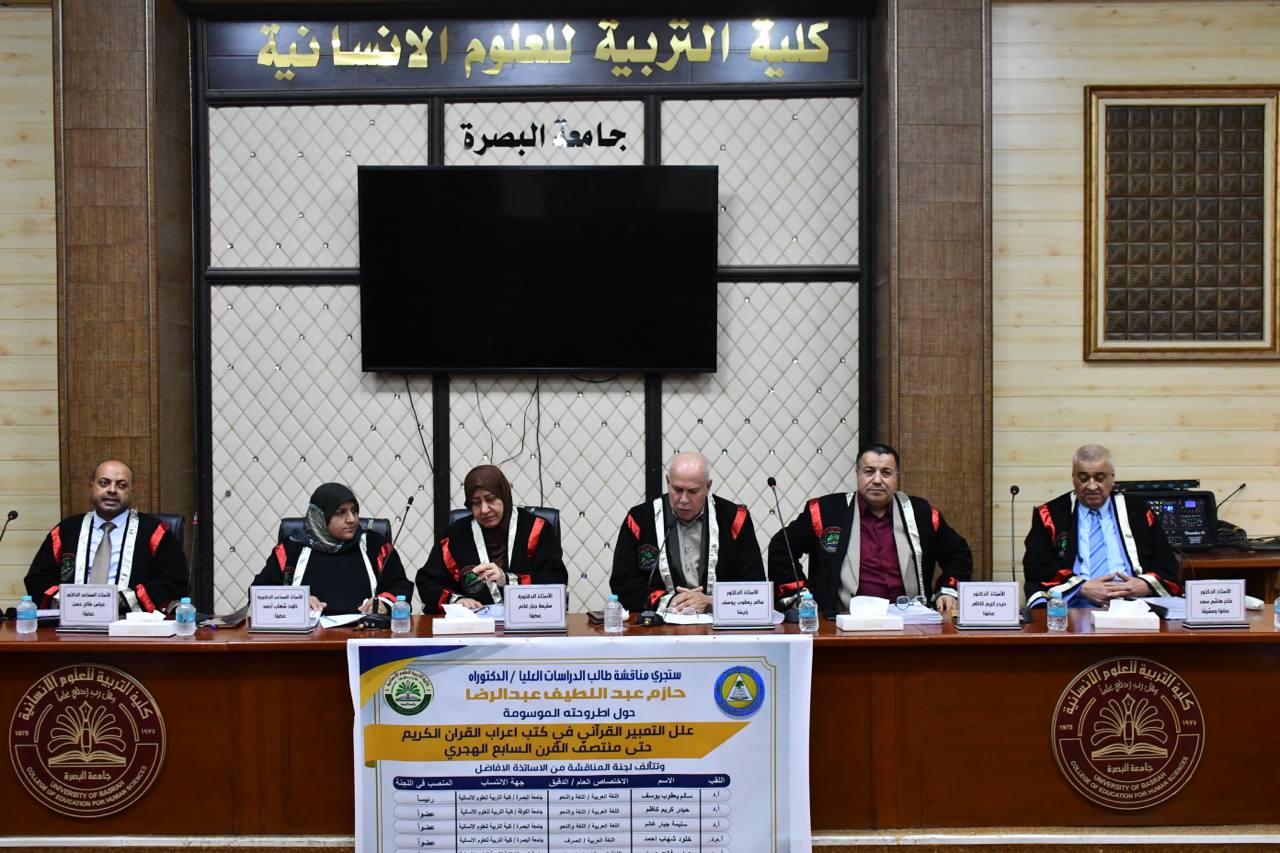
The doctoral thesis in the Department of Arabic Language, College of Education for Humanities - University of Basra, examined the causes of Quranic expression in the books of Quranic grammar until the middle of the seventh century AH.
The thesis presented by the student Hazem Abdul Latif Abdul Redha Al-Shawi aims to follow the efforts of the authors of the Quranic grammar books in researching the causes of Quranic expression in their view, monitoring their scientific efforts in deducing instances of miracle in its organization, monitoring the superior ability of the word to achieve meaning, and the rhetorical style that forms the pillar of Quranic expression and its organization.
The thesis dealt with the study of the Holy Quran from the perspective of searching for the purposes of Quranic expression, and revealing its semantic reasons in the books of Quranic grammar, as the study selected some of those books that were concerned with Quranic grammar, and these books, despite the fact that their basic material and main subject is the grammar of Quranic words, have stopped at explaining the choice of those words, and clarifying their semantic purposes. The thesis concluded that the diversity of reasons and their images in a single Quranic text can be considered a linguistic and intellectual richness with which the horizons of the text extend in its visions and perceptions, as in their explanation for presenting the noun (Mutawaffika) over the noun (Rafi'uk), as they mentioned expressive reasons for presenting the active participle (Mutawaffika) over (Rafi'uk), including the existence of an intention that the Creator wants the Quranic expression according to the limited view of this presentation, perhaps represented by the fact that the passing It does not indicate the occurrence of death.
The study also explained that the reasons for the expression of defining and indefinite names in the Qur’anic verses had a fundamental entrance in the semantic direction of the Qur’anic expression. The definition may take the structural meaning to a semantic direction and purpose that differs from the indefiniteness and its intentions, with the indefiniteness indicating the meaning of generality and multiplicity, while the definition indicates the meaning of specialization and specification.
The study recommended paying attention to these valuable books that shed light on the study of the Holy Qur’an, its parsing, and explaining the wisdom of the secrets of its expression. They are an important cognitive resource that is added to the exegetical writings and the sciences of the Holy Qur’an to reveal the purposes of the Qur’anic text and interpret its verses