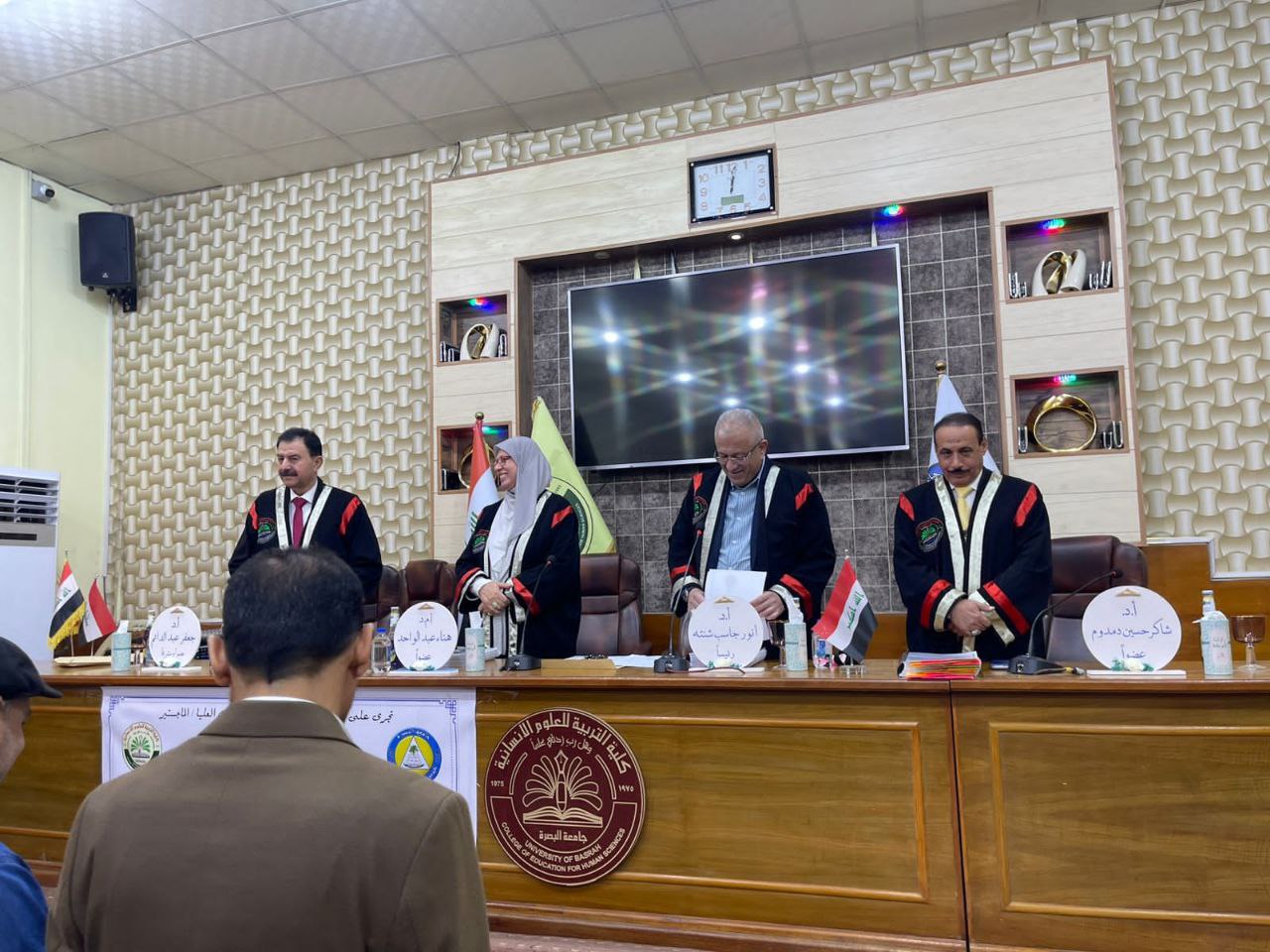
The master's thesis in the Department of History / College of Education for Humanities, University of Basra, discussed the international coalition against Iraq and its impact on the Middle East region 1990-2003 _ by the student (Maryam Sharif Mosh Anh).
The thesis presented by the student Maryam Sharif Mosh Anh aims to: What are the reasons for the international coalition against Iraq and its impact on the Middle East region 1990-2003 and how to monitor the historical facts related to the international coalition?
What are the circumstances surrounding the international coalition? What are the positions of the Arab, regional and Western countries on that coalition? What are the results of that coalition and what are the effects followed on Iraq and the Middle East region?
The thesis included an introduction, a preface, three chapters and a conclusion. The introduction, entitled (The Political Conditions in the Middle East Region Prior to the Second Gulf War (1980-1988), reviewed the events that the region witnessed during that era. The first chapter was entitled (The Iraqi Invasion of Kuwait and Its Effects on the Region 1990). The second chapter sheds light on (the United Nations resolutions against Iraq and the Arab and international position on the Iraqi invasion of Kuwait 1990-1991). While the third chapter reviewed (the economic, political, military and American strategic conditions in the Middle East 1990-2003). The thesis concluded that the Second Gulf War and the international coalition that consisted of 33 countries led by the United States of America were a starting point for profound changes in the Middle East, and their results were far-reaching, and caused profound changes in international and regional policies in the region, as they affected the balance of power, increased the American military presence, and greatly affected the paths of regional conflicts, the effects of which continue to this day