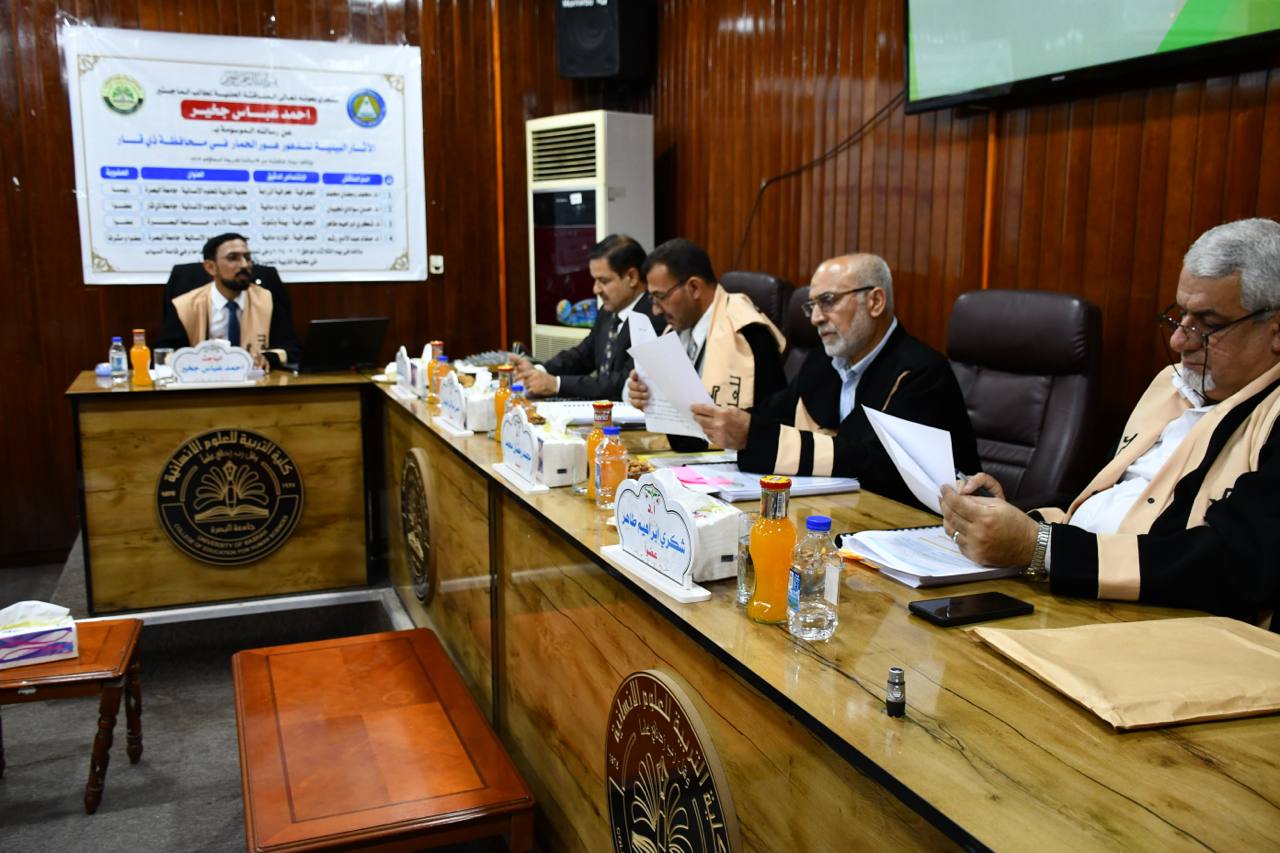
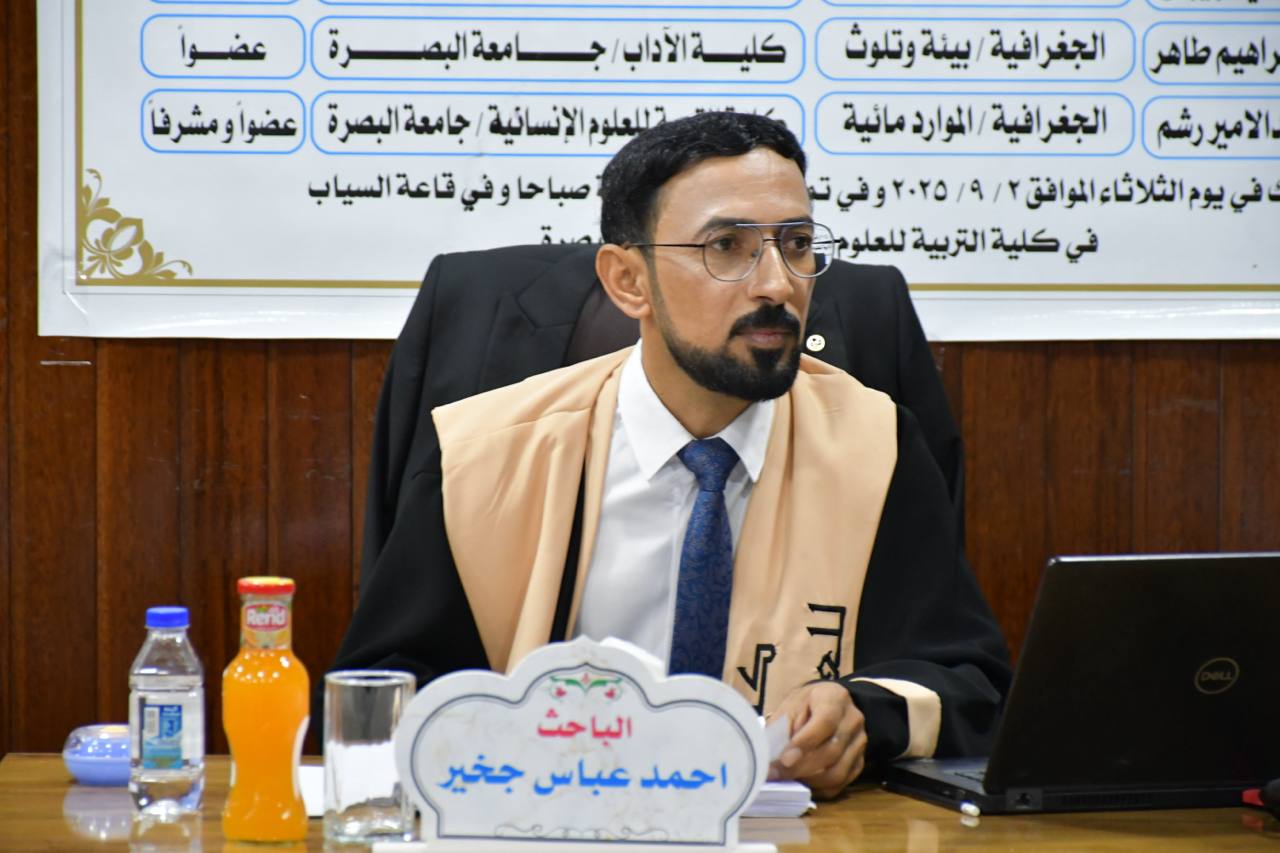
A master's thesis from the College of Education for Human Sciences at the University of Basra examined hydrological changes in the Western Hammar Marsh and their environmental impacts. The thesis, submitted by student Ahmed Abbas Jakhir Al-Yasiri, aimed to analyze the environmental impacts resulting from the deterioration of the quantitative and qualitative characteristics of the water in the Hammar Marsh in Dhi Qar Governorate during the period from 1970 to 2025. Water scarcity and the resulting risks and impacts on the ecosystem have become a major concern for researchers, faced with the challenges of climate change and human factors such as water management and increased demand. One of the primary objectives of the study is to uncover the truth about this issue and highlight the importance of the Hammar Marsh, maintaining water levels, and preventing recurrence of drought. This study explores the impact of the Hammar Marsh as a model for ecosystem change, given its location as one of the largest bodies of water in terms of area and impact on the environment. This is particularly true given that parts of its water have returned after being submerged, partially restoring the ecosystem to its previous state during the 1970s. The study also aims to identify changes in the area of the study area, the volume and quality of its water, and their negative impacts on all components of the local environment. The study focused on two main axes. The first was to reveal the extent of the marsh's quantitative deterioration, through shrinking area and declining water levels, and the qualitative deterioration of its water through increased salinity and pollution. The second axis was to reveal the environmental impacts of the marsh's water deterioration in the region. The thesis stated that the marsh has lost a large portion of its original area due to reduced water discharges, deteriorating water quality, and rising levels of salts and chemical elements to levels unsuitable for environmental life, exceeding permissible limits. The deterioration of the Hammar Marsh has resulted in significant environmental impacts, represented by changes in some climatic elements. The average annual temperature rose from 24.51°C in the 1970s to 27.33°C during the period 2010-2024, while relative humidity decreased to 35.57%, down from 48.24%. Drought and declining water resources have also led to the death of large numbers of buffalo, with 13,583 heads dying between 2021 and 2024. Agricultural areas have shrunk from 169,880 dunums to less than 6,423 dunums in 2023, compromising food security. Deteriorating water quality has contributed to an increase in skin and digestive diseases. Desertification has spread to more than 8,013 km² of former wetlands, leading to a loss of plant diversity. The deterioration has also caused population displacement, with the number declining from 25,075 in the 1970s to 11,566 in 2021, impacting the region's social and economic structure