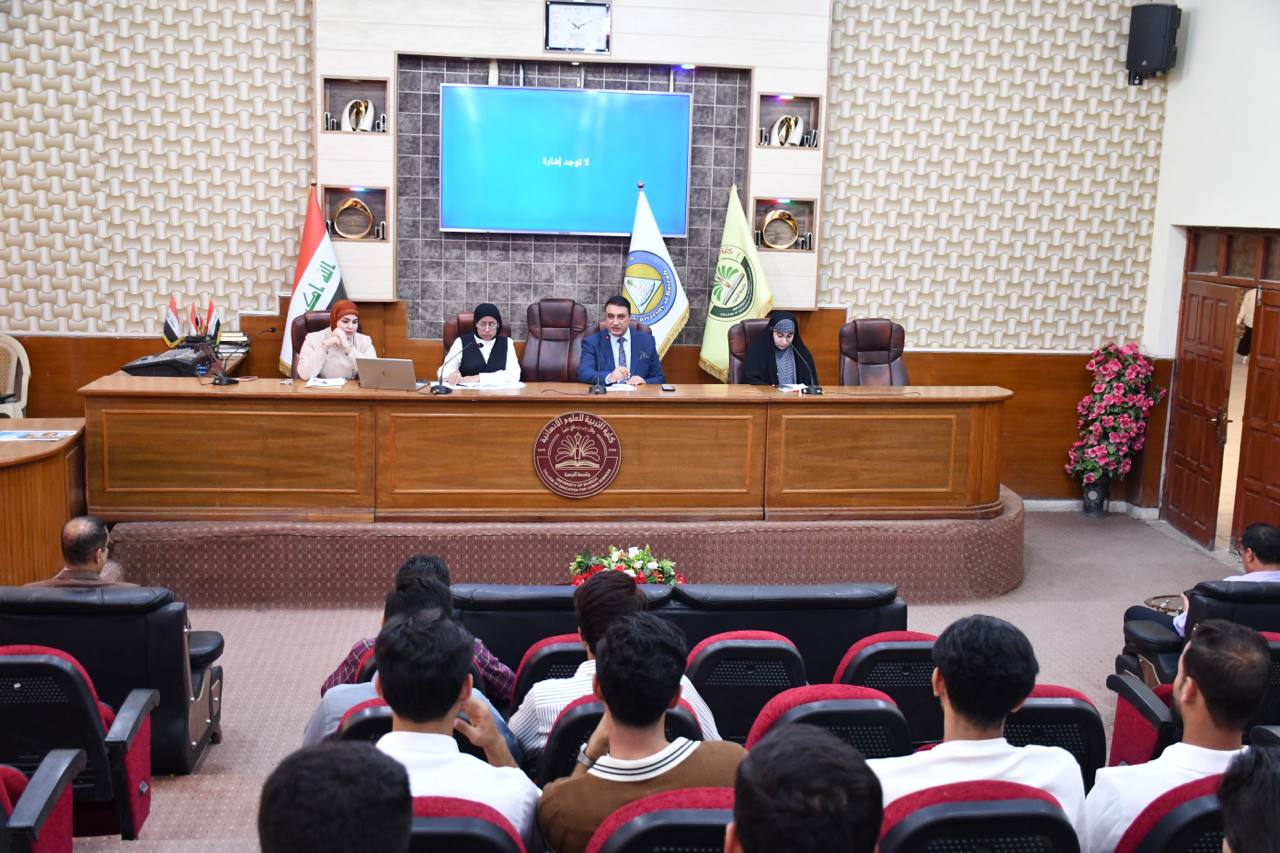
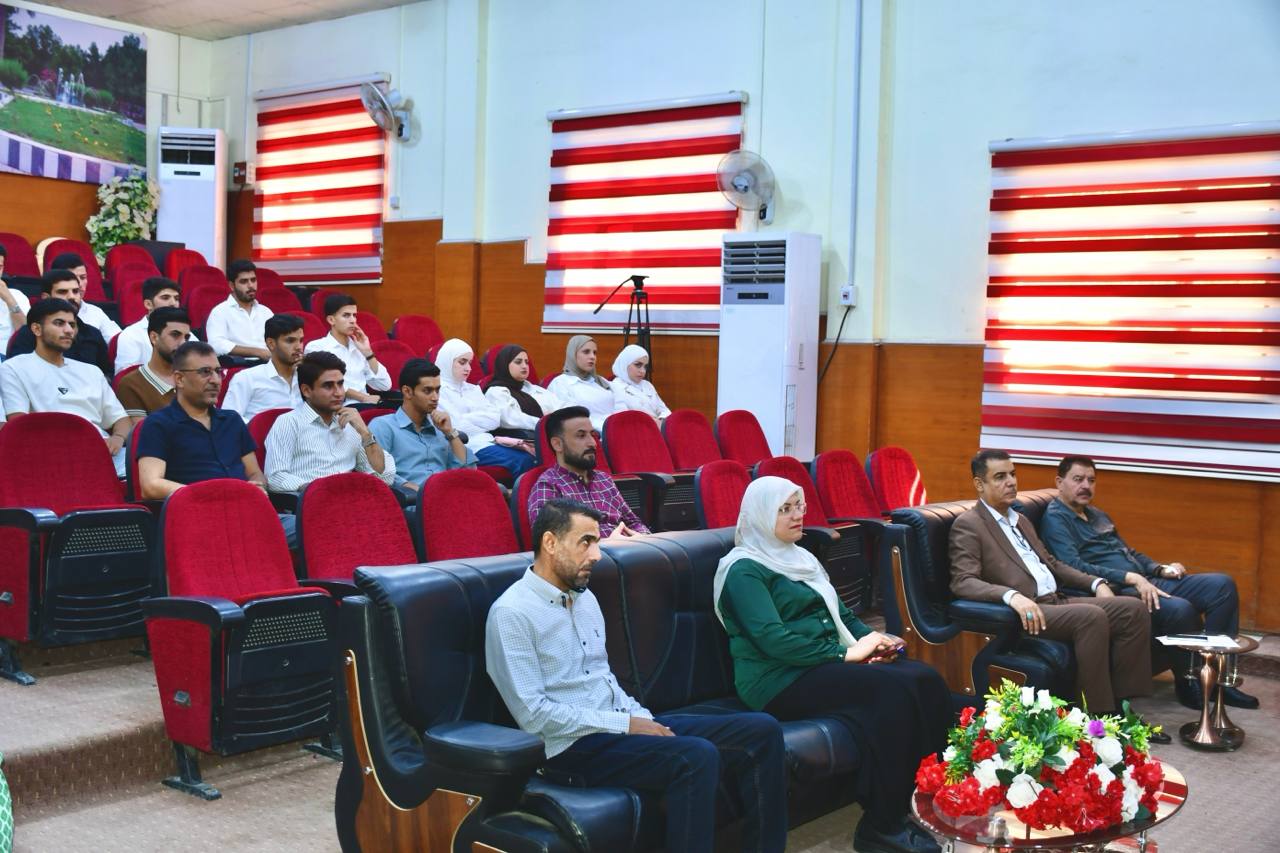
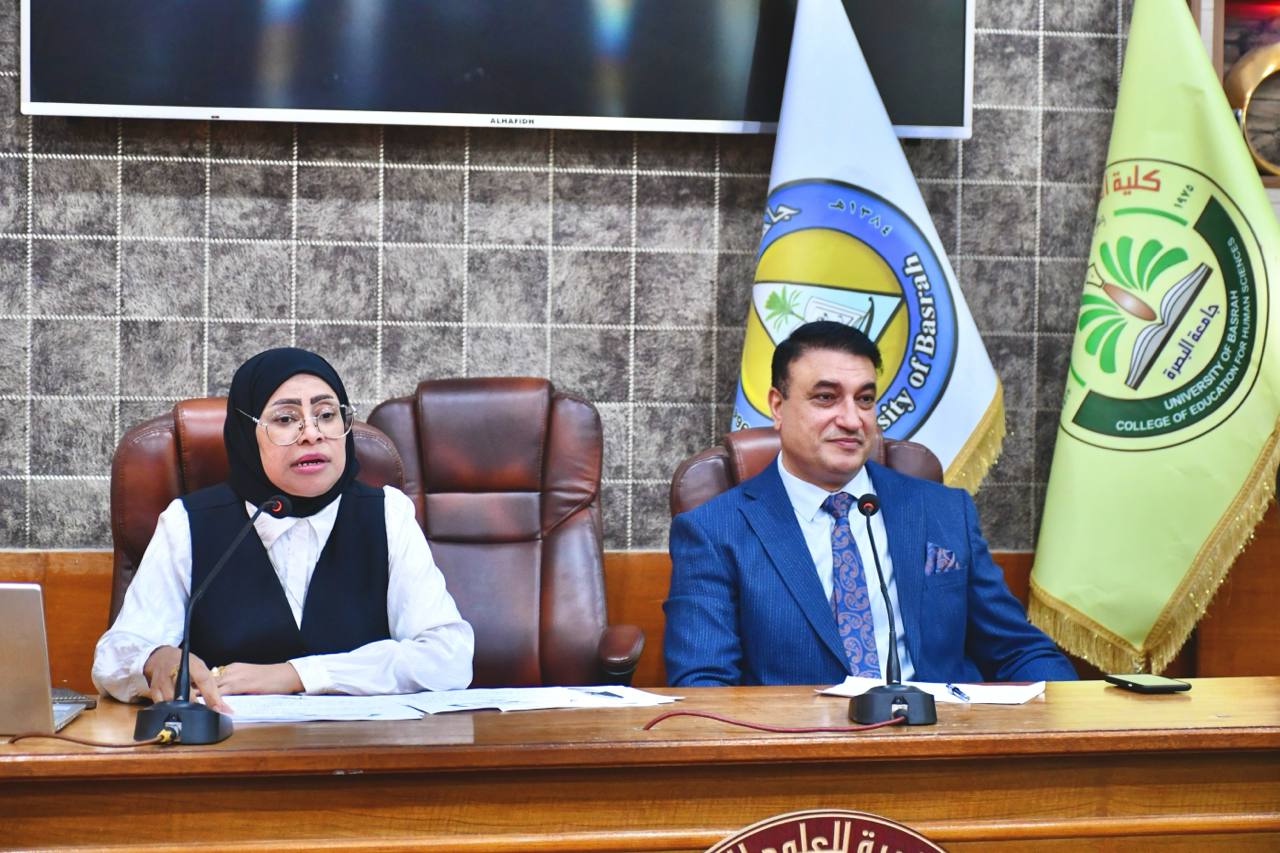
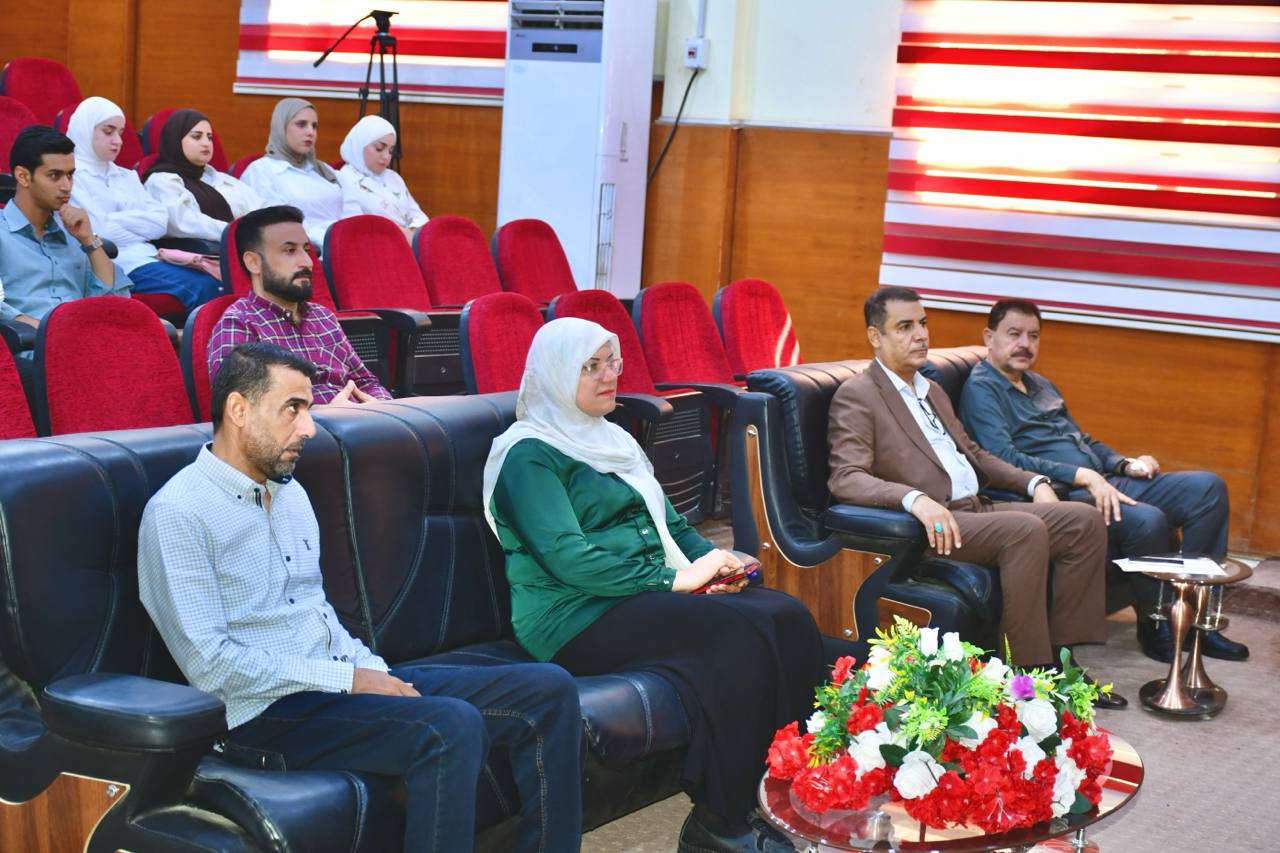
The History Department at the College of Education for the Humanities at the University of Basra held a specialized scientific symposium entitled "Quantitative and Qualitative Balance and its Activating Role of Artificial Intelligence in Historical Research." The symposium was attended by the college's Scientific Assistant, Dr. Alaa Abdul Imam, along with a select group of faculty members and undergraduate and graduate students.
The symposium aimed to highlight the positive and negative aspects of using artificial intelligence techniques in historical research and its impact on academic research methodology in the humanities.
The symposium was presented by Dr. Nawfal Kazim Mahous, Dr. Nidal Muhammad Qambar, Dr. Zainab Hazem Kashish, and Dr. Shahd Ali Abdullah. The lecturers addressed the advantages offered by artificial intelligence, most notably the rapid access to information and the facilitation of historical research and analysis.
The symposium also discussed the challenges and drawbacks associated with the use of artificial intelligence, including the inaccuracy of some available information, the lack of comprehensiveness of results, and the potential negative impact of limiting researchers' intellectual capabilities resulting from overreliance on these tools.
The symposium emphasized the importance of achieving a balance between technical proficiency and academic critical thinking, in order to leverage artificial intelligence to enhance the quality of research without compromising the spirit of scientific diligence and intellectual innovation