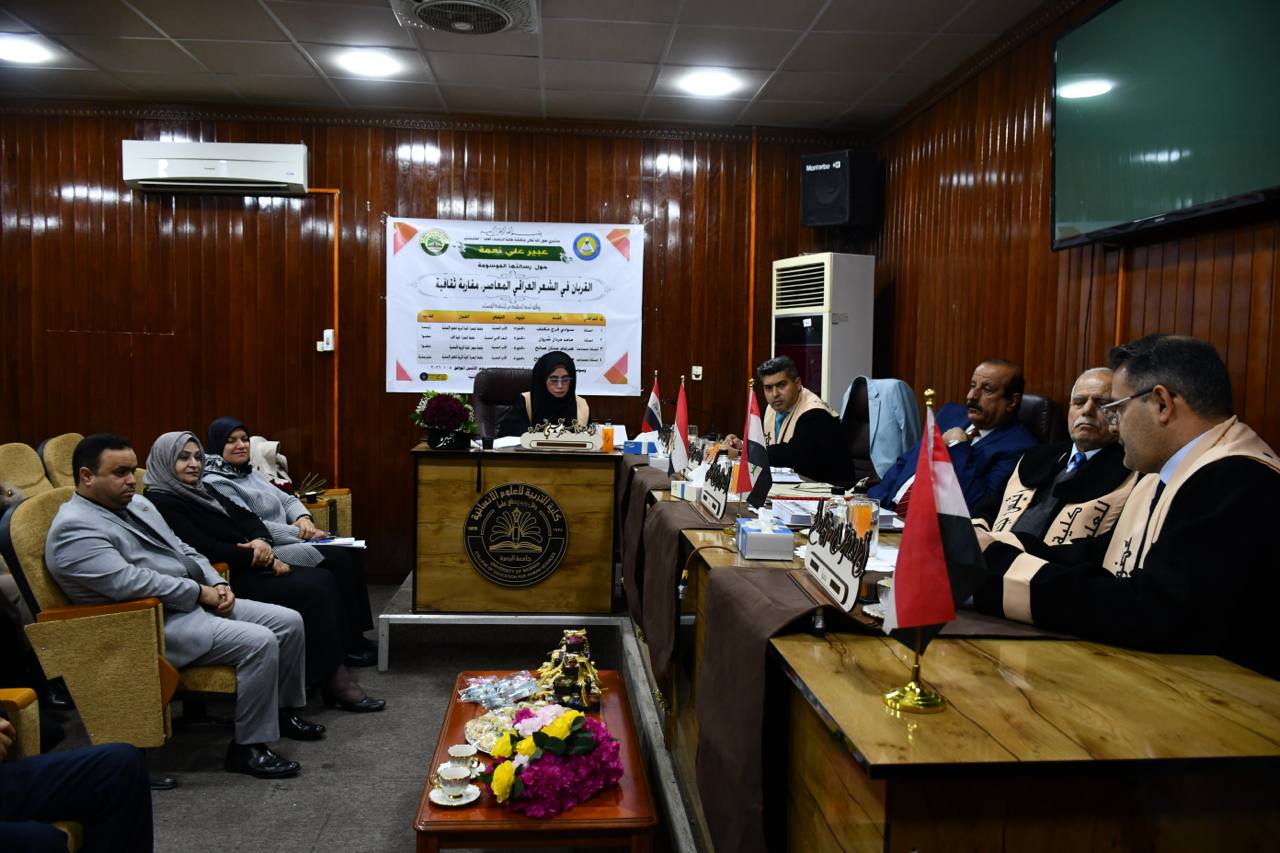
A master's thesis at the College of Education for Humanities at the University of Basra explored sacrifice in contemporary Iraqi poetry from a cultural perspective. The thesis, submitted by student Abeer Ali Naama, aimed to demonstrate that research on sacrifice extends beyond its ritualistic boundaries, opening up broader horizons for understanding the relationship between humanity and the divine absolute, as revealed in religious, mythological, and literary texts. Tracing the history of sacrifice, its references, and exploring its representations in literature reveals the relationship between the self and the other, and the transformations the concept has undergone throughout different eras. This study focuses on the presence of the concept in Iraqi poetry, tracing the manifestations of sacrifice (its forms, symbols, and significance).
The thesis concluded that sacrifice is not merely a ritual act, but a cultural system that reflects the values and identity of societies and defines the boundaries of the self in its relationship with the other. On one hand, it is a collective act that reinforces belonging and reproduces identity; on the other hand, it is an individual act that expresses resistance or submission, rebellion or obedience. Hence the importance of studying the qualitative and value-based transformations that have affected the concept of sacrifice, sometimes making it a symbol of freedom and rejection, and at other times a symbol of acceptance and submission