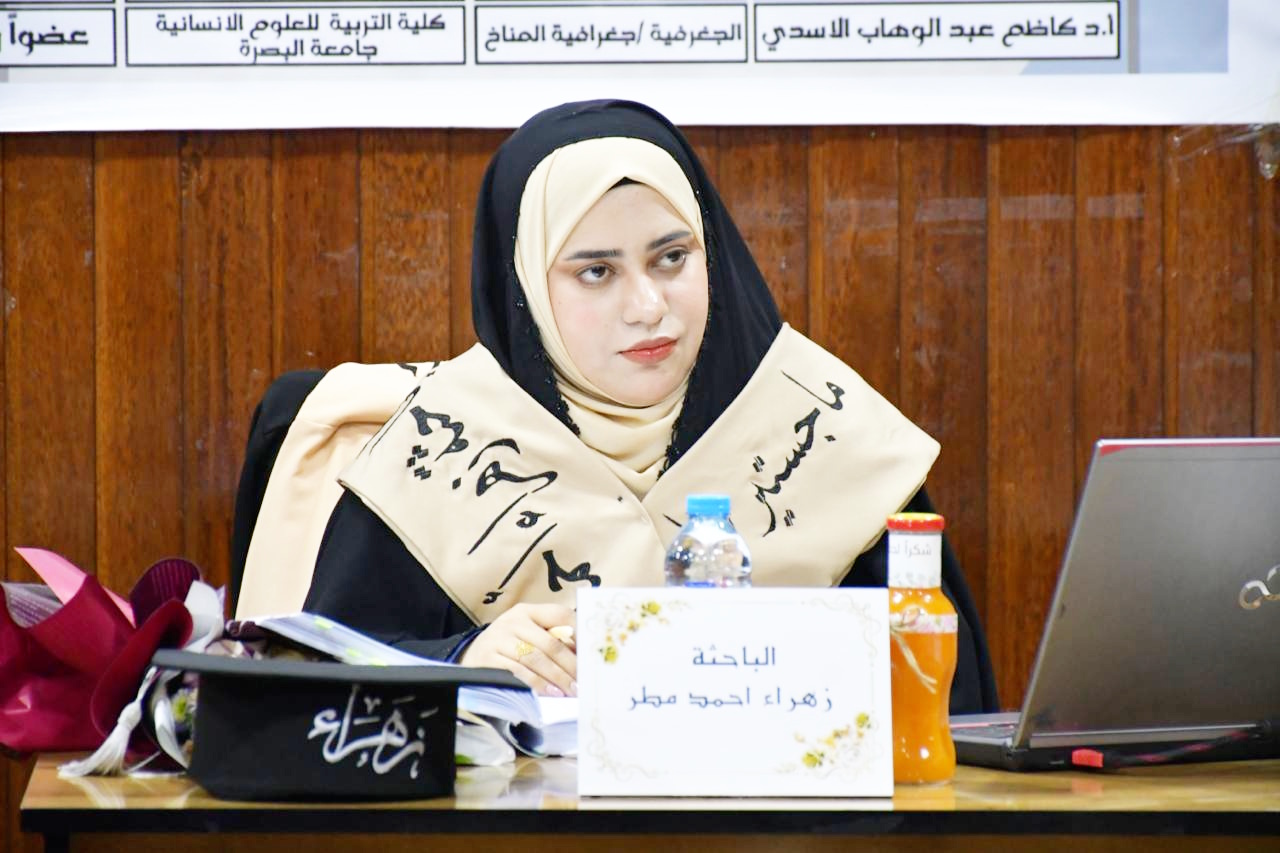
A master's thesis at the College of Education for Humanities at the University of Basra investigated the impact of climatic characteristics on air pollutant concentrations in the oil fields north of Basra and its implications for the health of workers there.
The master's thesis, submitted by student Zahraa Ahmed Matar Al-Nassiri, aimed to: analyze the prevailing climatic characteristics in the oil fields north of Basra (solar radiation, temperature, relative humidity, rainfall, wind speed and direction, and dust phenomena); measure air pollutant concentrations at work sites within the oil fields during 2024 and compare them with the previous five years; and study the relationship between climatic changes and the accumulation of air pollutants in the oil fields north of Basra.
The thesis comprised four main, interconnected chapters, in addition to the theoretical framework.
The theoretical framework covered the introduction, research problem, research hypotheses, research objectives, limitations, significance, methodology, study structure, and working methods.
The first chapter then examined the climatic characteristics of Basra Governorate from 2013–2014 to 2023–2024, including solar radiation, temperature, wind speed and direction, relative humidity, rainfall, and dust phenomena.
Chapter Two studied the concentrations of air pollutants in the oil fields north of Basra. Maximum and minimum concentrations of each gas were recorded and compared over the previous five years.
Chapter Three examined the relationship between climatic characteristics and air pollutant concentrations. First, the year 2024 was compared with the preceding years from 2013 to 2023. Second, the statistical relationship between climatic elements and the concentrations of these pollutants was analyzed.
Chapter Four addressed the impact of air pollutant concentrations on the health of workers in the oil fields north of Basra. It focused first on studying the prevalence of diseases affecting oil field workers, including respiratory diseases, skin diseases, heart diseases, eye allergies, and digestive system disorders. Second, it studied the statistical relationship between these diseases and the gas pollutants present in the oil fields in 2024.