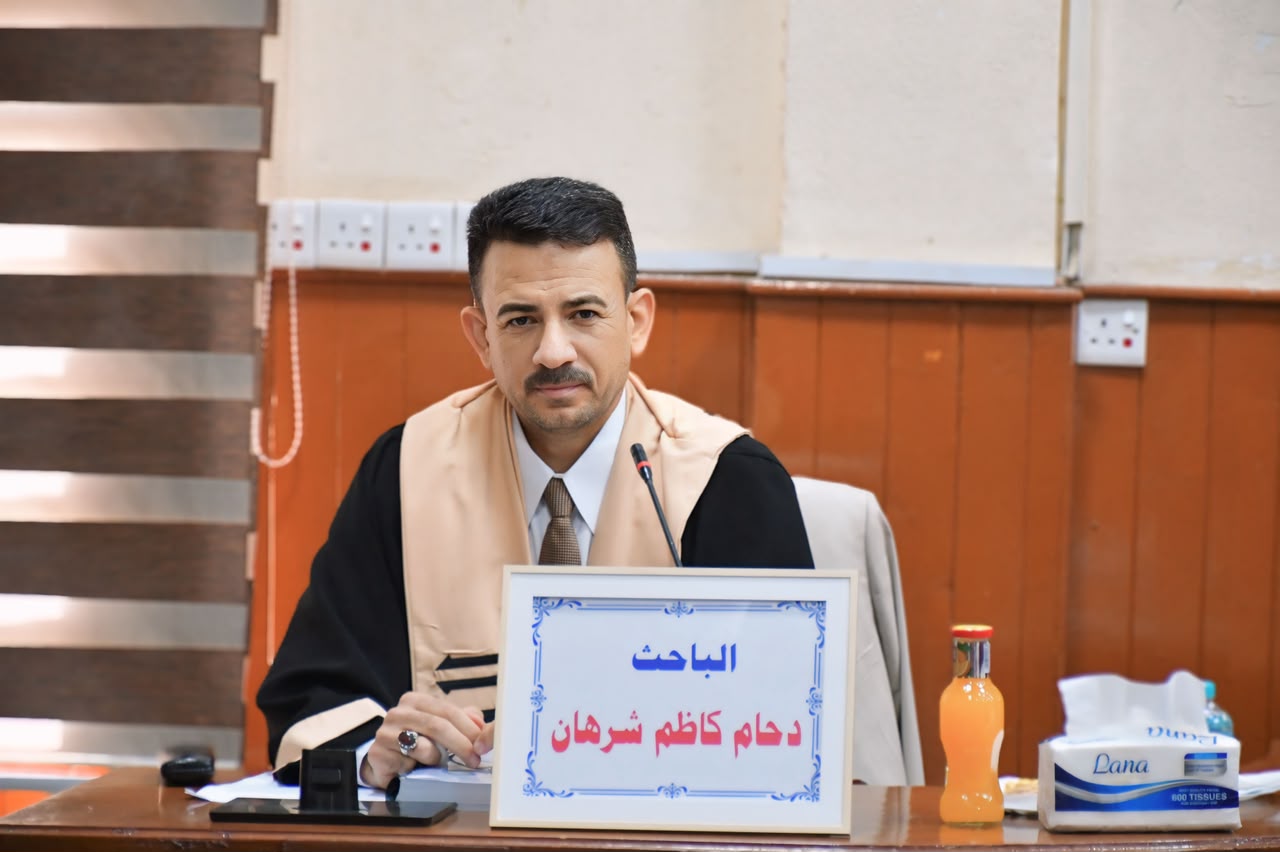
A doctoral dissertation at the University of Basra examines the workforce in the public health sector in Basra Governorate.
The doctoral dissertation, submitted to the College of Education for Humanities at the University of Basra – Department of Geography, explored:
The workforce in the public health sector in Basra Governorate. The doctoral dissertation submitted by the student, Daham Kadhim Sharhan Al-Mansouri, aimed to analyze and interpret the actual distribution of the workforce in the public health sector in Basra Governorate, at the district level, for the year 2024. It sought to understand the factors influencing this distribution, identify spatial and temporal variations within the environment, determine the prevalent job titles in classifying the health workforce according to their medical and administrative specializations, and assess their actual contribution rates based on the level of health institutions in each district. These factors directly impact the distribution of health sector employees in the governorate. The dissertation also revealed spatial and temporal variations in the growth rates of the public health sector workforce. Furthermore, it aimed to identify the most important geographical indicators that enhance the contribution of this vital sector, when compared to the contribution level of employees in other public sectors in Basra Governorate. Basra possesses significant human resources and economic capabilities, reflecting the ability of central and local government decision-making to utilize all available resources to provide health services to the governorate's residents, who are characterized by a high population and annual growth rate. Finally, the dissertation sought to identify the demographic and age-related characteristics of the workforce. The study examined the professional, educational, and marital factors influencing the spatial distribution of healthcare workers, revealing the efficiency of workforce distribution and its conformity to local and international standards, as well as the impacts and obstacles they face in their work. It also assessed the future needs for these workers and projected future needs up to 2034.
The study revealed an imbalance in workforce distribution based on the size and spread of healthcare institutions in each district by 2024, as well as at the environmental level and according to the workers' job titles. This indicates the need for districts to strengthen their healthcare infrastructure and institutions, achieve fairness and efficiency in workforce distribution, and provide healthcare services to the population according to district standards. The study concluded with a set of proposals that could enhance the fairness of the geographical distribution of healthcare workers, address the obstacles, impacts, and challenges they face as much as possible in the study area, and propose effective solutions to simplify the significant disparities in workforce distribution and reduce their problems, thereby ensuring the quality of healthcare services provided to the population.