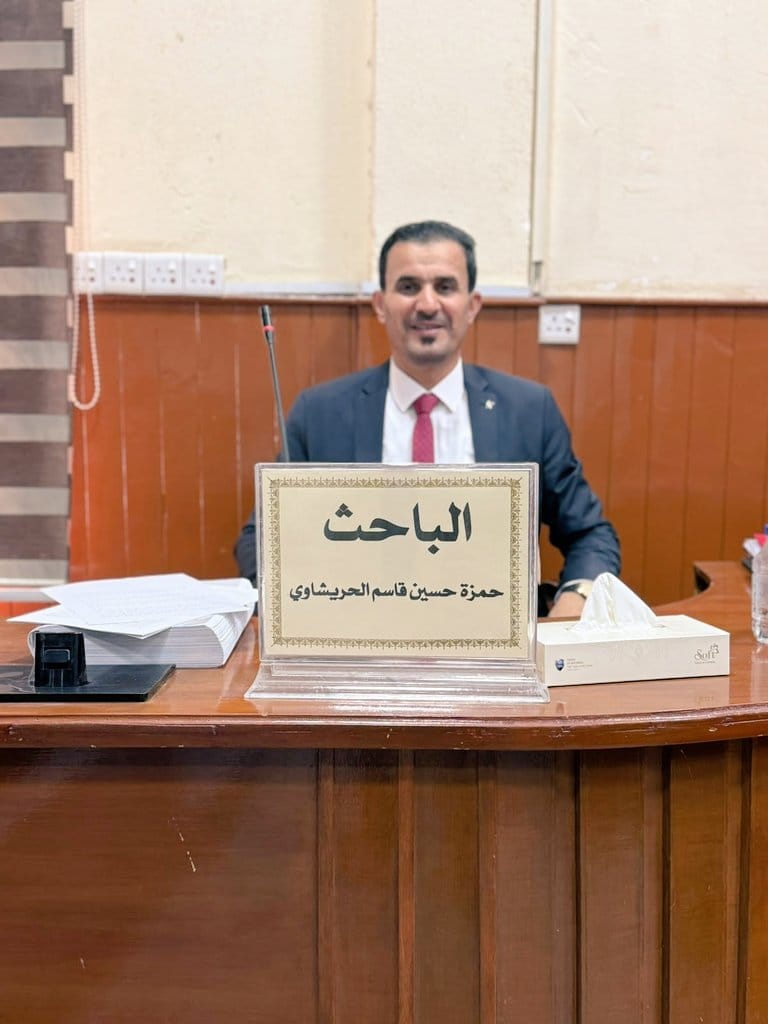
A doctoral dissertation at the University of Basra examines the title "The Role of Neoconservatives in US Foreign Policy towards Iraq (1993–2003)"
A doctoral dissertation at the College of Education for Humanities at the University of Basra examined the title "The Role of Neoconservatives in US Foreign Policy towards Iraq (1993–2003)." The dissertation, submitted by student Hamza Hussein Qasim Al-Harishawi, aimed to highlight the role of the neoconservative movement as an intellectual and political current that contributed to redirecting US foreign policy towards Iraq, culminating in the adoption of the regime change option in 2003. It also aimed to contribute to understanding the mechanisms of US decision-making.
The dissertation included an introduction, followed by four chapters and a conclusion. The researcher adopted a chronological approach to historical events as the primary method for presenting the material. The first chapter, titled "Neoconservatives and Their Impact on US Foreign Policy (1989–1992)," served as an introduction to the study and consisted of three sections. The first section provides a historical overview of the neoconservatives, their intellectual and political origins, and their impact on American politics. The second section clarifies the neoconservative stance on US foreign policy toward Iraq during the presidency of George Herbert Walker Bush (1989-1991). The third section examines the role of neoconservatives in reshaping US defense planning guidelines in the post-Soviet era of 1992.