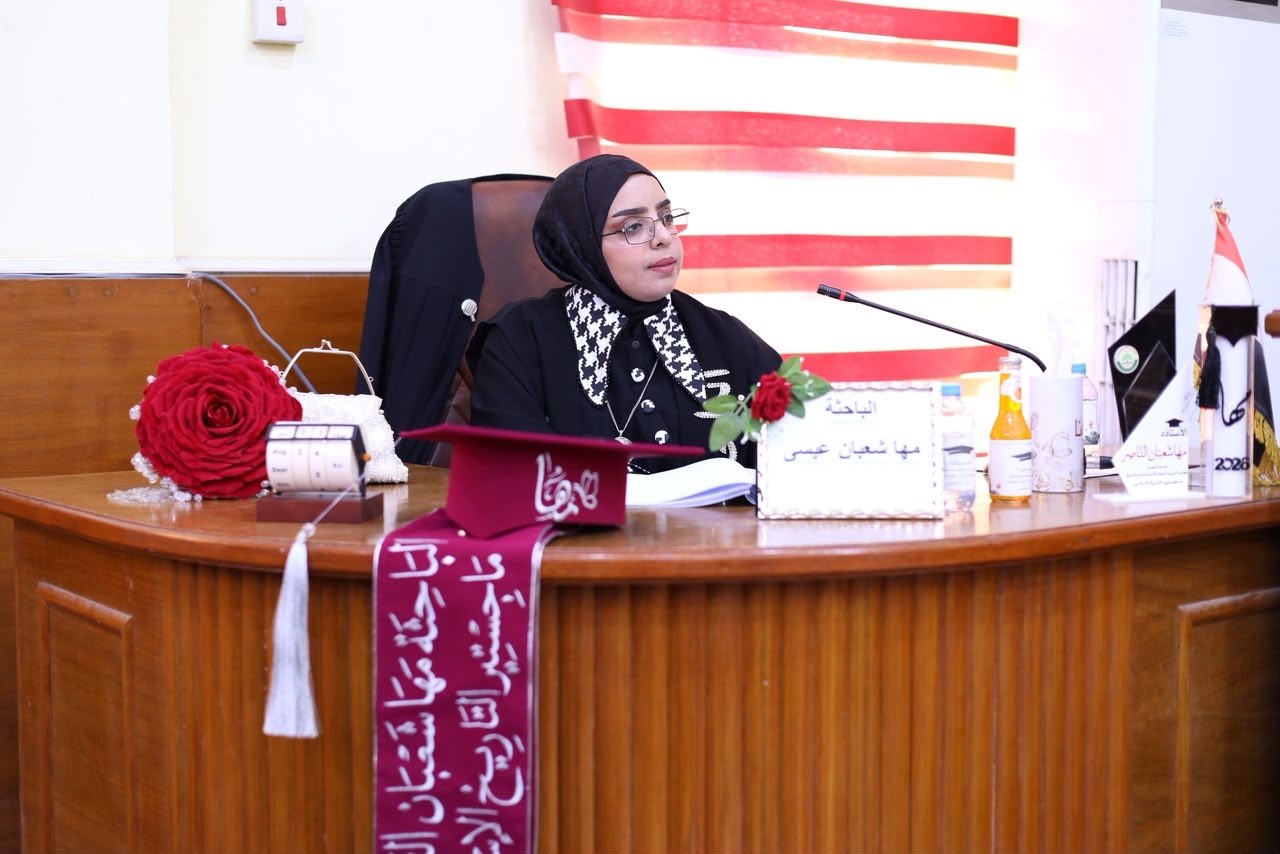
A Master's thesis was submitted to the College of Education for Human Sciences, Department of History (Islamic History), University of Basra, entitled "The Andalusian City of Baga: A Study of its General Conditions (92-809 AH / 710-1406 AD)."
The thesis, submitted by student Maha Shaaban Issa Al-Nasser, aimed to complement the study of Andalusian cities, specifically the city of Baga, examining its general conditions from 92-809 AH / 710-1406 AD. It explored all aspects of the city, both natural and human, clarifying its origins, development, distances from other cities, monuments, infrastructure, governments, and the achievements of its scholars throughout the period covered by the title. This is evident in the study's three chapters: the first chapter addresses the historical geography of Baga, the second examines its political and military history, and the third explores its intellectual life.
The master's thesis included that the city of Baga is one of the Andalusian cities connected to the district of Elvira. It is considered one of the dependencies of Elvira and is inclined towards the Al-Jawf region in the east of Cordoba, between it and Cordoba are seventeen farsakhs. It is considered one of the important Andalusian cities that the Muslims opened in the year (92 AH - 710 AD). The Muslims ruled it for several centuries, and thus it is considered an ancient city and was not created by the Muslims, but rather they resumed ruling in it after they controlled the Iberian Peninsula. Thus the Muslims continued to rule the Andalusian part of the Iberian Peninsula, including the city of Baga, for several centuries. Political and military events took place in it, and it went through different stages, that is, its transfer from one state to another. This competition was not limited to the Muslims only, but the Christians attacked it and tried to control it to annex it to their rule, and this is what actually happened, as the Christians of Portugal were able, after several attempts, to control it and then it fell at their hands in the year (809 AH - 1206 AD).