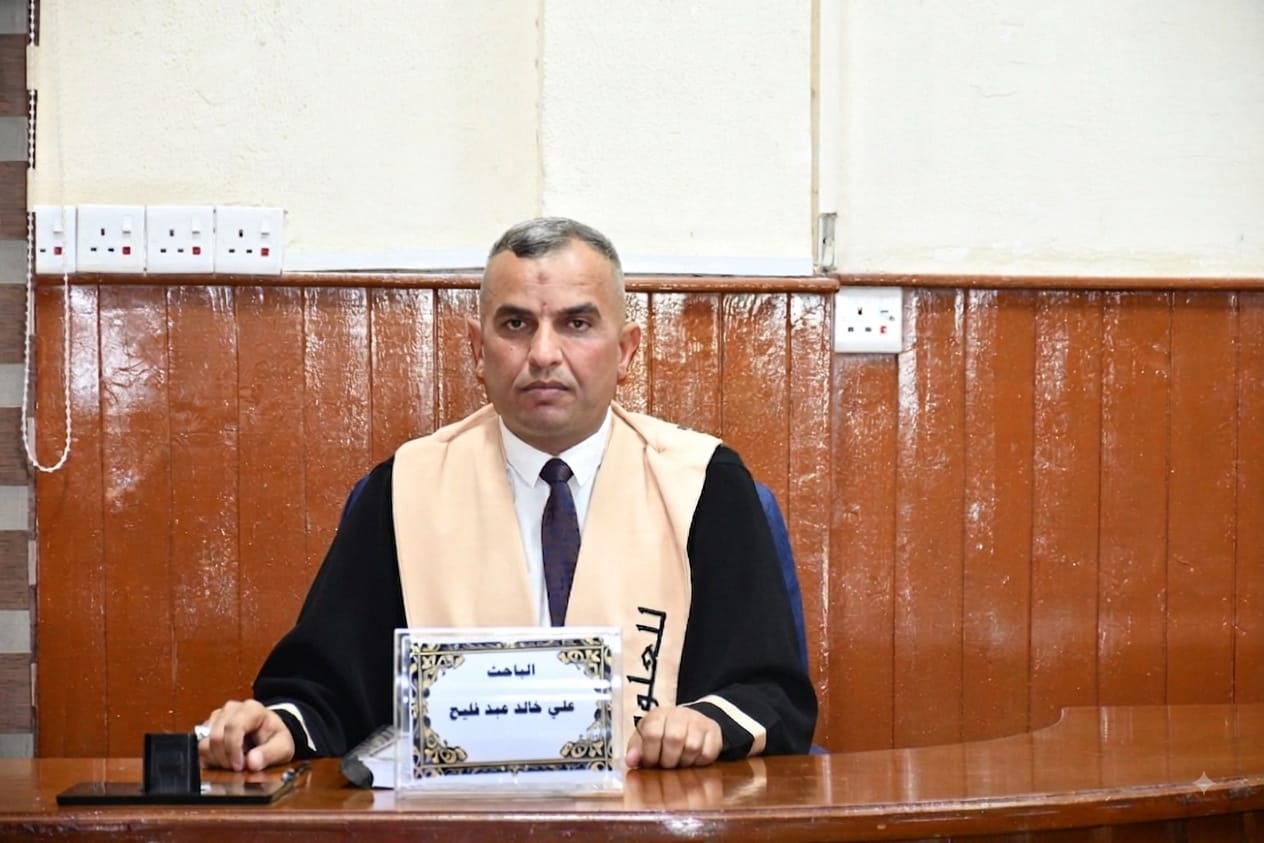
A doctoral dissertation at the College of Education for Humanities, University of Basra, examined "Economic Warfare and its Impact on Islamic Society during the Abbasid Era (132-334 AH)."
The dissertation, submitted by student Ali Khalid Abdul Falih, aimed to explore the concept of economic warfare, its contributing factors, and how it was employed to achieve political, military, and economic objectives. It also analyzed the nature of economic warfare during this period, identifying its tools and methods, outlining the administrative frameworks that supported it, and tracing its impact on society. The study comprised an introduction, four chapters, and a conclusion.
The study concluded with a number of key findings, most notably:
The ruling authority employed economic warfare to suppress and undermine its opponents through a systematic policy targeting the economic foundations that would strengthen their social and political standing and provide them with the means to confront the ruling authorities.
The study also revealed that confronting economic warfare during the Abbasid era was not limited to confrontational methods with the authorities. Rather, organized, peaceful forms and tools emerged in response. These peaceful forms of protest reflected an advanced societal awareness of the nature of economic conflict and the ability to express rejection of injustice. Letters and documents addressed to the authorities constituted an effective tool for protest and confronting economic warfare. Furthermore, a broad current of thought adopted a peaceful approach to confronting economic warfare by refusing to submit to the rulers' demands and by engaging in economic warfare through letters sent to the center of power, popular delegations, or armed resistance.