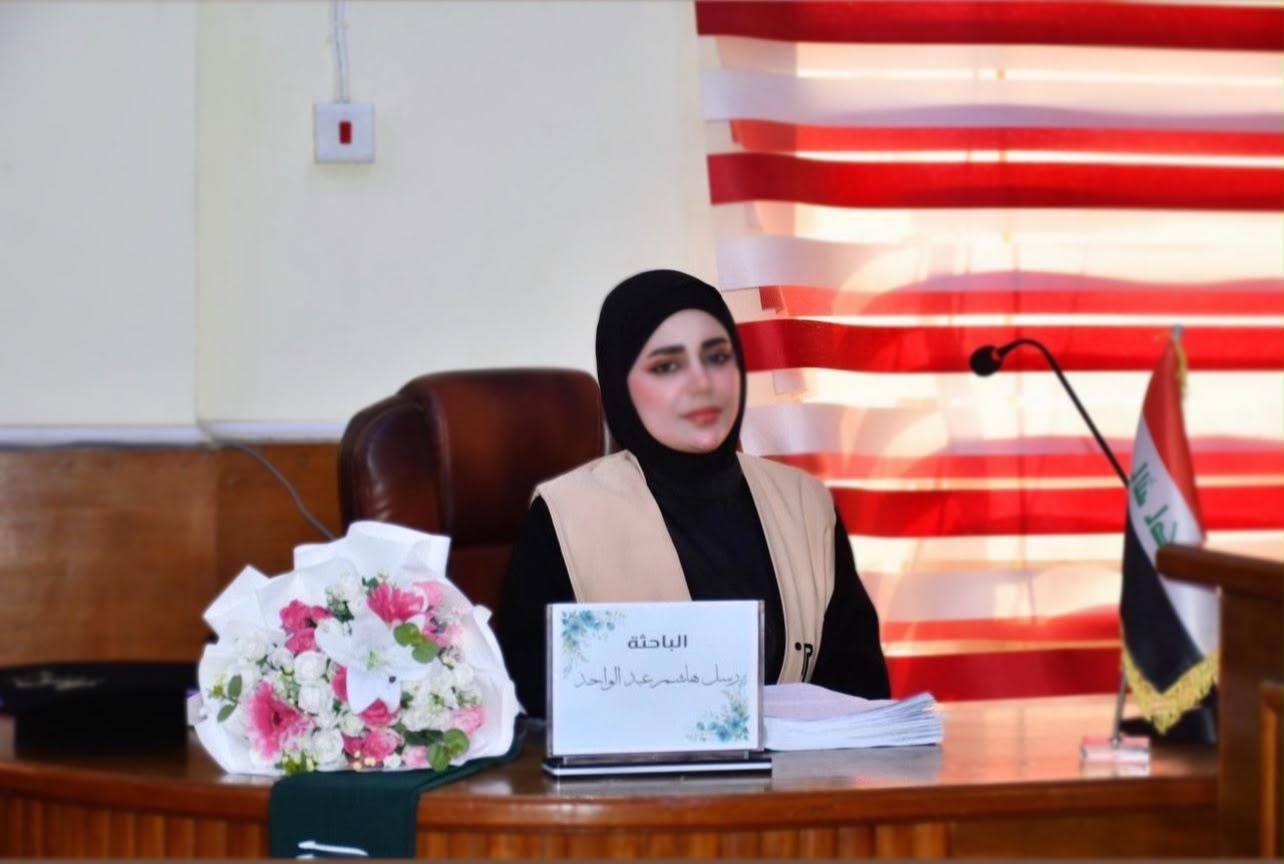
A master’s thesis at the College of Education for Humanities, University of Basra, titled "Spatial Analysis of the Home Furniture (Kitchen) Industry in Basra District: A Study in Industrial Geography," was presented by student Rusul Hashim Abdul-Wahid. The thesis aims to shed light on the home furniture (kitchen) industry in Basra District by examining its concept, significance, types, and historical evolution. It analyzes the impact of geographical factors—natural, human, and economic—on the locational patterns and distribution variations of this industry within the district. Additionally, the study investigates the spatial distribution of the industry and addresses key challenges facing the sector, proposing potential solutions to resolve them. The nature of the study necessitated its division into four main chapters, in addition to an introduction and a conclusion summarizing the key findings and recommendations. The chapters were structured as follows:
The first chapter focused on the concept of the domestic furniture (kitchen) industry and its historical evolution in the Basra District between 2003 and 2024. The second chapter examined the geographical factors underpinning this industry in the district. The third chapter addressed the classification, geographical distribution, and nature of industrial processes within the sector as of 2025. Finally, the fourth chapter explored the challenges facing the domestic furniture (kitchen) industry and its future prospects in the Basra District. The study reached several conclusions, most notably that geographical factors play a fundamental role in the establishment and localization of this industry. The findings revealed the existence of 74 active facilities, with a significant spatial concentration in the "Hamdan Industrial Area," which alone accounted for 33 industrial facilities. This area also hosted the largest share of the workforce—443 out of the district's total 715 workers—making it the primary industrial hub for this activity. Furthermore, the study demonstrated the absolute dominance of private ownership across all facilities, which are owned by independent individuals or local investment partnerships.