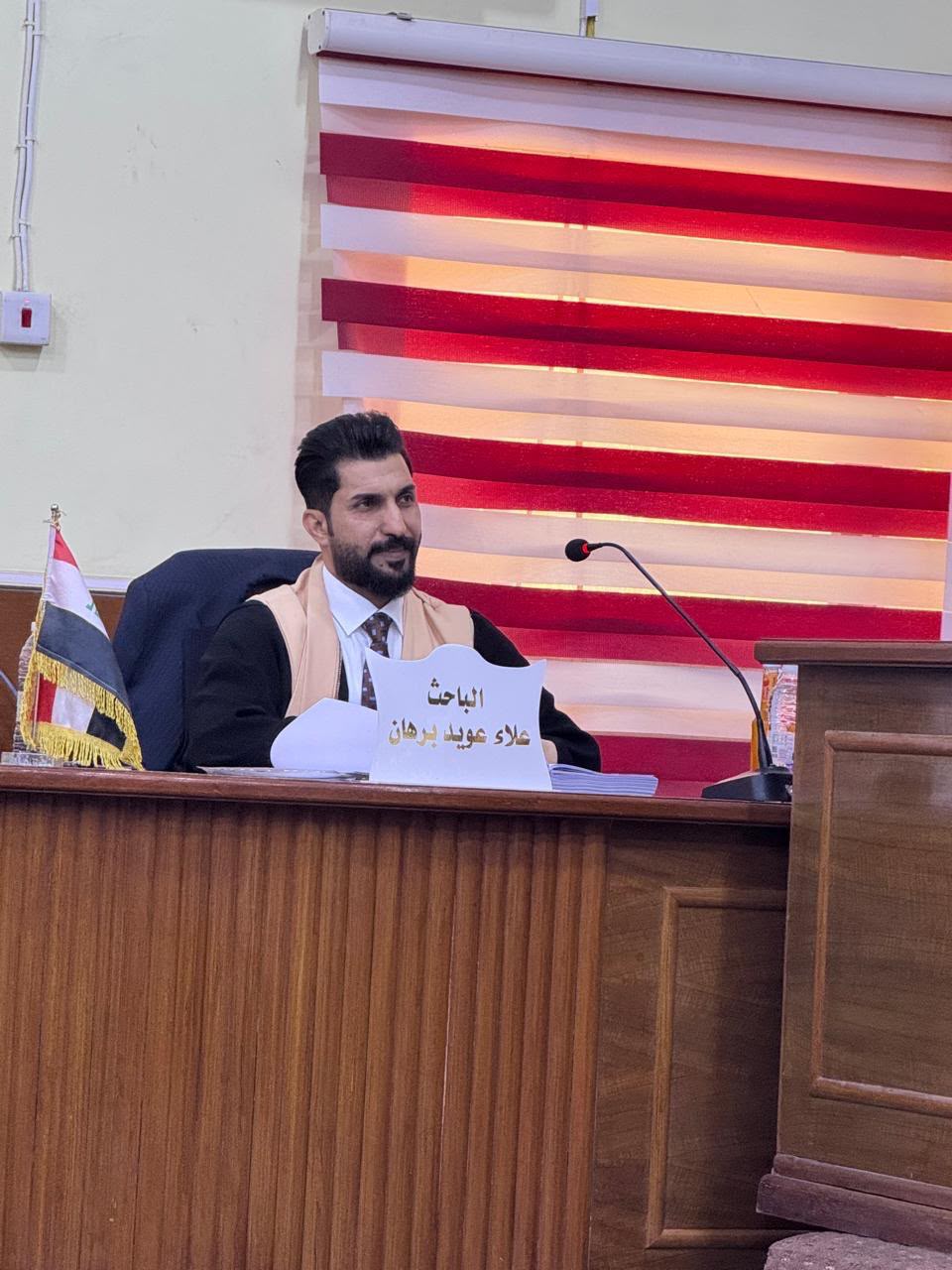
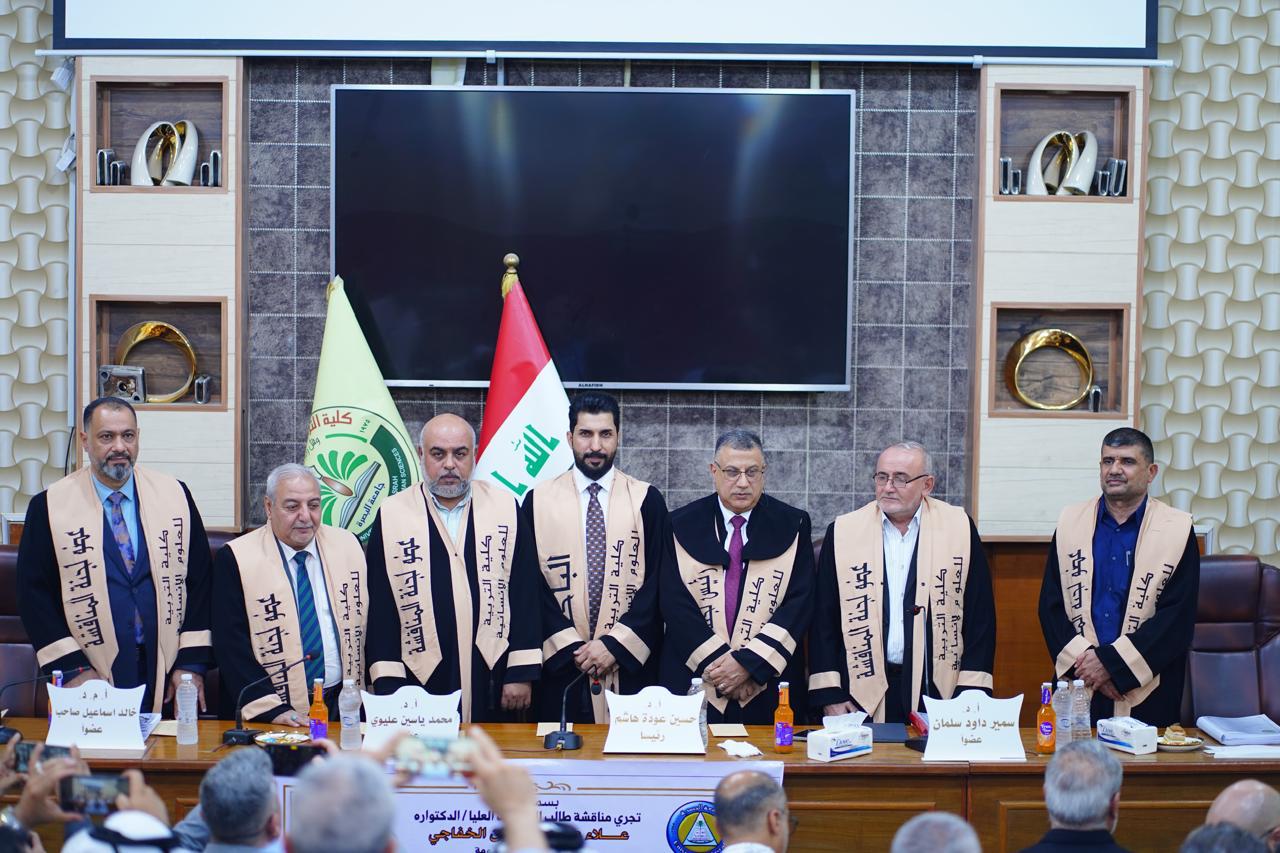
A doctoral dissertation at the College of Education for Humanities, University of Basra, examined grammatical reasoning (*al-ta‘līl al-naḥwī*) within the commentaries on Ibn al-Ḥājib’s *al-Kāfiya* during the seventh century AH. The dissertation, presented by student Alaa Owaid Burhan al-Khafaji, aimed to highlight the comprehensive and exhaustive nature of these commentaries; hardly any grammatical rule is presented without a rationale—often with multiple reasons provided for a single rule. Furthermore, the analysis reveals a layering of reasoning levels, where pedagogical, analogical, dialectical, and logical justifications intertwine without strict separation—reflecting the influence of philosophy and logic on linguistic studies. The commentators extended their reasoning to justify and rationalize even linguistic constructions not found in the speech of the Arabs, thereby reinforcing and grounding grammatical rules. This period was characterized by the presentation, critique, and judicious selection—conducted with precision and scholarly integrity—of the views held by the Basran and Kufan schools, as well as other grammarians such as the Baghdadis.
The dissertation’s findings regarding grammatical reasoning were categorized into two main sections: reasoning concerning nouns and reasoning concerning verbs. The section on nouns comprised three topics: reasoning for nouns in the nominative case (*marfū‘āt*), the accusative case (*manṣūbāt*), and the genitive case (*majrūrāt*). Similarly, the section on verbs was divided into three topics: the first addressed indeclinable verbs (*mabniyyāt*); the second focused on declinable verbs (*mu‘rabāt*); and the third dealt with abrograting verbs (*nāsikhah*)